
Triumph and Tenacity
Champions Crowned at the 2026 Malaysia Open Badminton Spectacle
AROUND THE GLOBE
2/19/20265 min read
The Malaysia Open, a cornerstone of the global badminton calendar, once again captivated fans worldwide in 2026. As the inaugural event of the BWF World Tour season, this Super 1000 tournament not only sets the tone for the year's fierce competitions but also underscores the sport's evolving dynamics. Held from January 6 to 11 at the iconic Axiata Arena in Kuala Lumpur, the Petronas Malaysia Open 2026 boasted a staggering prize pool of USD 1,450,000, attracting the crème de la crème of badminton talent from over 20 countries. With roots tracing back to 1937, the event has grown into a symbol of prestige, where Olympic champions, world number ones, and rising stars clash in high-stakes battles that often foreshadow Olympic and World Championship outcomes. Its Super 1000 status ensures maximum ranking points—up to 12,000 for winners—making it a critical launchpad for athletes aiming to dominate the tour. This year, the tournament highlighted themes of resilience, dominance, and unexpected twists, with injuries and comebacks adding layers of drama to the proceedings.
In men's singles, Thailand's Kunlavut Vitidsarn emerged as the victor, claiming his maiden Super 1000 title in a final marred by injury. The 24-year-old, ranked world number three entering the event, faced off against China's top-seeded Shi Yuqi, the reigning world champion and defending Malaysia Open titleholder. The match, anticipated as a gruelling showdown between two of the sport's elite, took an abrupt turn. Vitidsarn edged a tightly contested first game 23-21, showcasing his trademark agility and precise smashes to overcome Shi's defensive prowess. However, early in the second game, with Vitidsarn leading 6-1, Shi was forced to retire due to a debilitating back injury. This unfortunate exit handed Vitidsarn the win, though he later admitted to feeling low on energy himself, suggesting that prolonged rallies might have favoured Shi. Vitidsarn's path to the final was impressive, including a straight-games semi-final victory over Indonesia's Jonatan Christie (21-16, 21-16), where he dominated with flawless net play and strategic drop shots. On the other side, Shi had dispatched Denmark's Anders Antonsen 21-13, 21-14 in the semis, but his injury overshadowed what could have been a defining rematch. Vitidsarn, a Paris 2024 Olympic silver medallist, pocketed $101,500 and 12,000 ranking points, propelling him toward potential world number one status. This triumph marks a significant milestone for Thai badminton, building on Vitidsarn's consistent performances and highlighting the nation's growing influence in the sport.
Shifting to women's singles, South Korea's An Se-young solidified her status as the undisputed queen of the discipline by clinching her third consecutive Malaysia Open title—a feat achieved by only three other players in the tournament's history. The world number one and Paris 2024 Olympic gold medallist faced China's Wang Zhiyi, ranked second globally, in a final that tested An's mental fortitude. An dominated the first game 21-15 with aggressive baseline rallies and pinpoint accuracy, forcing Wang into unforced errors. The second game proved more dramatic; trailing 19-13 (or 18-11 in some accounts), An mounted a remarkable comeback, winning 11 of the next 14 points to seal the match 24-22. Her patience, defensive resilience, and calm under pressure were on full display, extending her winning streak to 25 matches across seasons and marking her ninth straight victory over Wang. An's journey included a semi-final walkover against Chen Yufei, allowing her to conserve energy, while Wang advanced by defeating India's PV Sindhu 21-16, 21-15 in the semis—a notable run for Sindhu, who reached her first Super 1000 semi in years. Post-match, An emphasized her focus on performance over accolades, stating her confidence stemmed from rigorous training. Earning $101,500 and 12,000 points, An's dominance not only reinforces South Korea's stronghold in women's singles but also sets a high bar for the 2026 season, where she aims to defend her Olympic crown.
The men's doubles category delivered the tournament's only three-game final, underscoring the intensity of pair competitions. South Korea's top-seeded duo, Kim Won-ho and Seo Seung-jae, triumphed over Malaysia's home favourites Aaron Chia and Soh Wooi Yik with scores of 21-15, 12-21, 21-18. Kim, a Paris 2024 silver medallist, and Seo showcased superior teamwork, particularly in the decisive third game where they pulled ahead after a 10-10 tie with powerful smashes and quick intercepts. The Malaysians, two-time Olympic bronze medallists and world number two, fought valiantly, winning the second game convincingly but faltering in the clutch moments amid roaring crowd support. Kim and Seo's path featured a semi-final win over England's Ben Lane and Sean Vendy, while Chia and Soh edged Indonesia's Fajar Alfian and Muhammad Shohibul Fikri. This victory, worth $107,300 and 12,000 points, cements the Korean pair's position as frontrunners, adding to their impressive resume and highlighting the tactical depth required in doubles.
In women's doubles, China's Olympic silver medallists Liu Shengshu and Tan Ning asserted their dominance, defeating South Korea's Baek Ha-na and Lee So-hee 21-18, 21-12 in straight games. As the top seeds, Liu and Tan controlled the pace from the outset, using sharp angles and relentless attacks to dismantle their opponents' defense. The first game was competitive, with Baek and Lee mounting brief challenges, but the Chinese pair's synergy proved unbreakable in the second. Their semi-final rout of South Korea's Jeong Na-eun and Lee Yeon-woo set the stage, while Baek and Lee advanced past Japan's Yuki Fukushima and Mayu Matsumoto. This win, securing $107,300 and 12,000 points, reaffirms China's prowess in women's doubles and positions Liu and Tan as key contenders for future majors.
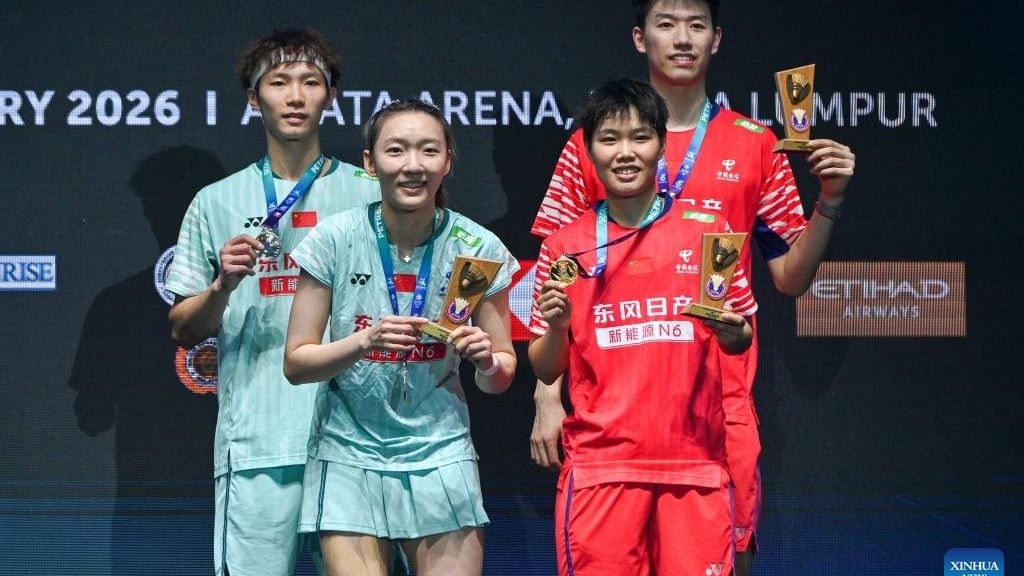
Finally, the mixed doubles crown went to China's Feng Yanzhe and Huang Dongping, who outclassed compatriots Jiang Zhenbang and Wei Yaxin 21-19, 21-19. Huang, a Tokyo 2020 Olympic gold medallist, brought experience to the partnership, guiding them through tense rallies with precise lobs and net kills. Both games were closely fought, with Feng and Huang edging ahead in the closing stages thanks to better error management. Their semi-final victory over Hong Kong's Tang Chun Man and Tse Ying Suet was dominant, while Jiang and Wei defeated Denmark's Jesper Toft and Amalie Magelund. Earning $107,300 and 12,000 points, this all-Chinese final exemplified the nation's depth in mixed doubles, with implications for team events like the Sudirman Cup.
The 2026 Malaysia Open not only rewarded individual brilliance but also emphasized the sport's global appeal and unpredictability. With injuries like Shi's reminding athletes of physical demands, and comebacks like An's inspiring fans, the tournament lived up to its legacy. As the BWF World Tour progresses to events like the India Open, these champions—Vitidsarn, An, Kim/Seo, Liu/Tan, and Feng/Huang—carry momentum that could define the year. In a sport where milliseconds decide fates, the Malaysia Open remains a beacon of excellence, blending tradition with thrilling modernity.