
The Night the Unthinkable Happened: Buster Douglas Shocks Mike Tyson
TRADITION & HISTORY
3/4/20254 min read
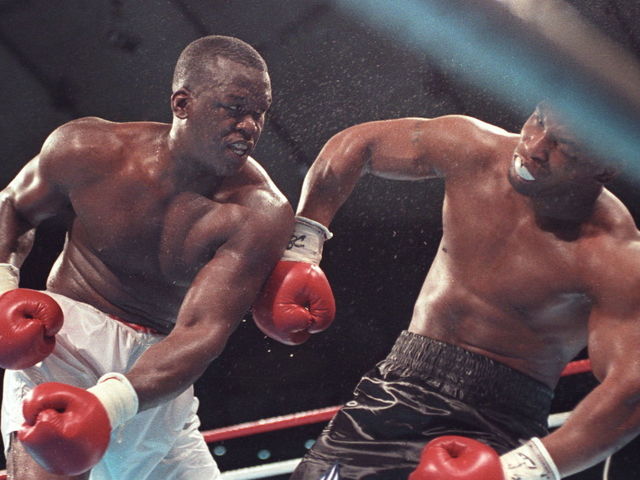
On February 11, 1990, the Tokyo Dome in Japan became the stage for one of the most staggering upsets in sports history. James "Buster" Douglas, a relatively unheralded heavyweight boxer with 42-1 odds stacked against him, stepped into the ring against the seemingly invincible Mike Tyson—and walked out as the new heavyweight champion of the world. In a fight that defied all expectations, Douglas knocked out Tyson in the 10th round, ending the champion’s 37-fight unbeaten streak and etching an indelible mark in the annals of boxing lore.
The Iron Mike Mythos
At the time, Mike Tyson was more than a boxer; he was a cultural phenomenon. The 23-year-old from Brooklyn had stormed through the heavyweight division with a ferocity that left opponents broken and spectators in awe. With a record of 37-0, including 33 knockouts, Tyson had claimed the WBC, WBA, and IBF heavyweight titles, unifying the division by 1987 and defending them with ruthless efficiency. His aura of invincibility was palpable—he was "Iron Mike," the baddest man on the planet, a force of nature who seemed destined to reign indefinitely.
In contrast, Buster Douglas was seen as little more than a stepping stone. The 29-year-old from Columbus, Ohio, carried a respectable but unspectacular record of 29-4-1 into the fight. Oddsmakers dismissed him outright; Las Vegas sportsbooks offered astronomical 42-1 odds against him, a reflection of the near-universal belief that Tyson would dispatch him as he had so many others. Douglas, a skilled but inconsistent fighter, had never faced an opponent of Tyson’s calibre, and few gave him a chance to survive, let alone win.
A Fight Fuelled by Heart
Yet, beneath the surface, the dynamics were more complex. Tyson’s preparation for the bout was reportedly lacklustre—he later admitted to underestimating Douglas and indulging in Tokyo’s nightlife rather than focusing on training. Douglas, meanwhile, was driven by personal tragedy and resolve. Just 23 days before the fight, his mother, Lula Pearl, had passed away, and he channelled his grief into a singular focus. He trained with an intensity that belied his underdog status, determined to honour her memory.
When the bell rang, the disparity in preparation became evident. Douglas, standing 6-foot-4 with an 83-inch reach, used his jab and movement to keep the shorter, more aggressive Tyson at bay. For nine rounds, he weathered Tyson’s onslaught, landing crisp combinations and showing resilience that surprised even the most optimistic observers. In the eighth round, Tyson rocked Douglas with a devastating uppercut, sending him to the canvas. The referee’s count was slow and controversial—some argued Douglas was down for more than 10 seconds—but he rose at nine, clinging to survival.
The Knockout Heard Around the World
The turning point came in the 10th round. Douglas, fuelled by adrenaline and purpose, unleashed a ferocious sequence: a sharp right uppercut snapped Tyson’s head back, followed by a flurry of punches that staggered the champion. As Tyson stumbled, Douglas delivered a crushing left hook, sending "Iron Mike" crashing to the mat for the first time in his professional career. Tyson, dazed and disoriented, fumbled for his mouthpiece as referee Octavio Meyran counted him out at 1:22 of the round. The Tokyo Dome erupted in stunned silence, then chaos, as the unimaginable became reality.
At 11:30 p.m. local time, Douglas was declared the winner by knockout, claiming the WBC, WBA, and IBF heavyweight titles. The 42-1 underdog had done the impossible, toppling a giant and rewriting the script of boxing history.
The Aftermath and Legacy
The fallout was immediate and seismic. Tyson’s mystique, so carefully cultivated, crumbled overnight. Questions swirled about his focus, his team, and his future. For Douglas, the victory was bittersweet. He basked briefly in the glow of triumph, but his reign as champion lasted just eight months—he lost the titles to Evander Holyfield in his first defence on October 25, 1990. Douglas retired in 1999 with a record of 38-6-1, never again reaching the heights of that Tokyo night.
For Tyson, the loss marked the beginning of a tumultuous decline. He would reclaim the heavyweight title in 1996, but the aura of invincibility was gone forever. The defeat exposed vulnerabilities—both in the ring and in his personal life—that would define the next chapter of his career.
A Defining Moment in Sports
Thirty-five years later, February 11, 1990, remains a touchstone in sports history—not just for boxing, but for the sheer audacity of the upset. It’s a testament to the unpredictability of competition, where odds and reputations can dissolve in the face of determination and opportunity. Buster Douglas’s victory over Mike Tyson transcends statistics; it’s a story of an underdog who seized his moment, delivering a knockout that still echoes as one of the greatest shocks the sporting world has ever seen.
“It was an amazing dream,” Douglas said of that February 11th, 1990, knockout. Buster was given little or no chance of surviving more than a handful of rounds against the fearsome Tyson, who was undefeated as a champion. That fight in Tokyo was considered as an easy and mere stepping stone for Mike Tyson, prior to an expected and very much anticipated fight against Evander Holyfield. When reminded that no one thought he had a chance to defeat Tyson, James said, “My Mother believes in me!”
As we look back from 2025, that night in Tokyo stands as a reminder: in sports, as in life, the improbable can become immortal.