
The New Sports Hub
Nation-scale Investment and What It Means for the Future of Global Sports Infrastructure
AROUND THE GLOBE
1/4/20264 min read

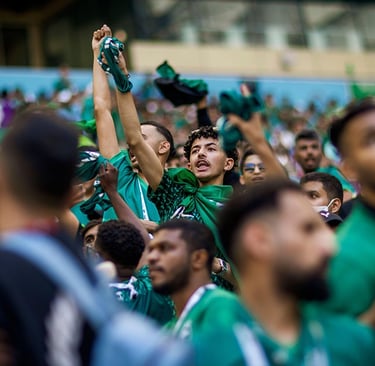
In an era where sports transcend mere entertainment to become engines of economic growth, cultural exchange, and technological innovation, Saudi Arabia's latest venture stands as a bold testament to this evolution. Announced in September 2024, a monumental $3.3 billion sports complex is set to rise, forged through a partnership between Saudi-based Alpha Jossor Investments and the UK-founded Blockchain Sports Ecosystem. This project, which includes a $1.6 billion allocation for real estate developments such as 1,500 villas and over 3,300 apartments, aims to create one of the largest innovative athletic and training hubs in the Middle East and North Africa (MENA) region, with ripple effects extending globally. At its core lies a cutting-edge football academy equipped with state-of-the-art training facilities, integrating advanced technologies like AI, extended reality (XR), and blockchain to revolutionize athlete development and performance tracking.
This initiative is not just about building stadiums or gyms; it's a comprehensive ecosystem designed to foster sustainable urban living while attracting investments in sports and entertainment. The Memorandum of Understanding (MoU) signed in Riyadh between Abdulrahman Al-Qarni, chairman of Alpha Jossor, and Dmitry Saksonov, founder of Blockchain Sports Ecosystem, underscores a commitment to blending physical infrastructure with digital innovation. As Janahi, CEO of Alpha Jossor, stated, this partnership represents "a strong step toward creating an innovative sports hub in Saudi Arabia, aligning with our vision for sustainable growth." Saksonov echoed this sentiment, noting that the project will "set a new standard for the global sports community" through its tech-driven approach.
The hub's scope is ambitious, extending beyond Saudi borders to connect over 16 countries via a digital platform for managing athlete identities. This platform will enable secure transactions, global scouting, and enhanced connectivity among more than 30 football academies worldwide, many of which Blockchain Sports already operates, including three in Brazil training over 600 youth from low-income families. Technologies involved are protected under INTEROCO copyright, ensuring recognition in 181 countries, which positions the project as a blueprint for international collaboration in sports.
This development is deeply intertwined with Saudi Arabia's Vision 2030, the kingdom's transformative blueprint for economic diversification away from oil dependency. Launched in 2016, Vision 2030 emphasizes sectors like tourism, entertainment, and sports to drive growth, with sports playing a pivotal role in boosting participation rates from 13% to 40% of the population by 2030. The kingdom has already poured over $6 billion into sports initiatives, transforming it from a regional player into a global powerhouse. Annual investments of $2 billion are projected to generate $22 billion in economic impact over the next decade and create over 100,000 jobs in sports and related industries.
Key projects under this vision include the privatization of sports clubs, which aims to achieve qualitative leaps in the sector through private investment and international partnerships. High-profile moves, such as acquiring stakes in European football clubs like Newcastle United, launching the LIV Golf tour, and bidding to host the 2034 FIFA World Cup, highlight Saudi's aggressive strategy. The Sports Boulevard in Riyadh, Qiddiya entertainment city, and the Mohammed Bin Salman Nonprofit City are other mega-projects that integrate sports with urban development, emphasizing sustainability and community engagement. These efforts are part of a broader push to position Saudi Arabia as a hub for international events, from boxing matches featuring global stars to Formula 1 races, all while fostering local talent and infrastructure.
However, this nation-scale investment isn't without scrutiny. Critics argue that such ventures serve as "sportswashing," a tactic to polish the kingdom's international image amid human rights concerns. Northeastern University experts have expressed doubts about the long-term viability of these strategies, citing risks in the volatile global sports market. Despite this, proponents highlight tangible benefits, including job creation and economic diversification, which align with Vision 2030's goals of reducing oil reliance and promoting social reforms.
Zooming out, this Saudi project mirrors and amplifies global trends in sports infrastructure. The industry is undergoing a rapid evolution, with venues transforming into city-scale platforms that blend sports, entertainment, and community spaces. By 2025, key trends include sustainable practices—such as eco-friendly materials and energy-efficient designs—tech-enhanced equipment like AI-driven analytics and VR training, and multi-purpose facilities that host diverse events beyond traditional games. Deloitte's 2025 sports industry outlook predicts heightened professionalization, with increased investments in talent development, data analytics, and fan experiences.
Blockchain technology, central to the Saudi hub, is a rising star in this landscape. It enables immutable records for ticket sales, athlete data management, and fan engagement through tokenized assets and loyalty programs. Blockchain Sports Ecosystem exemplifies this by democratizing access to athletic careers, allowing fans to invest directly in teams or players via smart contracts. This not only enhances transparency and security but also fosters a global ecosystem where scouts, coaches, and investors connect seamlessly. In the broader sports tech arena, innovations like 5G-enabled stadiums, AI-powered video analytics, and esports platforms are growing at a 26.5% CAGR, reshaping how sports are consumed and monetized.
For the MENA region, this hub could be a game-changer. Historically underserved in top-tier sports infrastructure, MENA countries stand to benefit from Saudi's leadership, potentially sparking a wave of similar investments in neighbouring nations. The project's global outreach—through partnerships in Brazil and beyond—could elevate underrepresented talents, bridging gaps between developed and emerging markets. Economically, BlueWeave Consulting projects the Saudi sports market to reach $15.63 billion by 2031, growing at a 10.32% CAGR, driven by such initiatives.
Looking ahead, the future of global sports infrastructure appears increasingly interconnected and tech-centric. As nations like Saudi Arabia invest at scale, we may see a shift toward hybrid models where physical hubs integrate with digital metaverses, allowing virtual participation in real-world events. Challenges remain, including ensuring equitable access and addressing environmental impacts, but the potential for inclusive growth is immense. PwC's 2025 outlook emphasizes privacy-first strategies and data governance, which the blockchain elements of this project address head-on.
In conclusion, Saudi Arabia's $3.3 billion sports complex is more than a local landmark; it's a harbinger of how nation-scale investments can redefine global sports. By fusing UK tech expertise with Vision 2030's ambitions, it promises to nurture talent, drive economic vitality, and inspire similar transformations worldwide. As the project progresses into 2026 and beyond, its success could cement Saudi's role as a pioneer in the next era of sports infrastructure, where innovation meets aspiration on a truly global stage.