
THE LAST DANCE OF FOOTBALL’S GOLDEN GENERATION
FIFA WORLD CUP 2026LEGENDS OF THE GAME
6/3/20265 min read
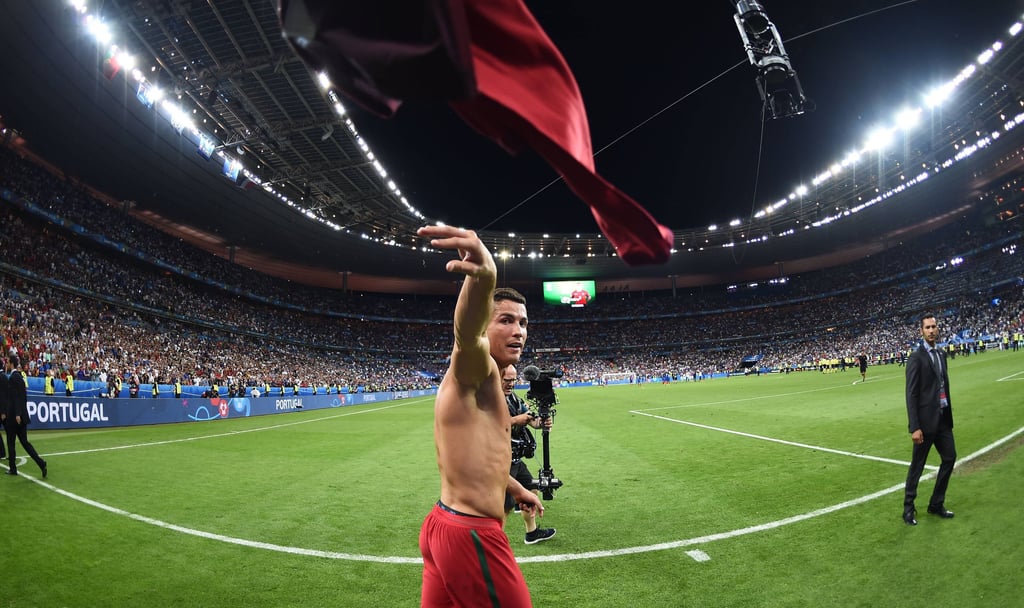
As the World Cup clock runs down, the game’s greatest icons confront longevity, legacy, succession—and the possibility of one final goodbye
Every great sporting generation eventually encounters an opponent it cannot defeat: time.
At the 2026 FIFA World Cup, that truth has become impossible to ignore. Lionel Messi is 39. Cristiano Ronaldo is 41. Luka Modrić is 40. For more than a decade, players of their generation have occupied football’s grandest stages so consistently that their presence came to feel permanent. World Cups arrived and departed; managers changed; tactical fashions evolved; younger stars emerged. Yet the familiar figures remained.
Now, permanence is giving way to perspective.
For some of football’s most celebrated veterans, the 2026 tournament may represent a final appearance on the sport’s greatest international stage. That possibility must be expressed carefully: a player’s retirement is a fact only when the player confirms it. But the arithmetic of a four-year World Cup cycle is unavoidable. The next men’s tournament will not arrive until 2030.
This, then, is not simply a story about saying goodbye. It is about what happens when extraordinary athletes confront the narrowing horizon of an extraordinary career.
The Longevity Revolution
The presence of elite footballers in their late thirties and early forties is not an accident. Modern careers are increasingly supported by advances in sports medicine, nutrition, workload management, recovery science and individualised training.
But longevity is not the same as immunity from ageing.
Research into athletic performance consistently shows that physiological capacities change with age. The challenge for an older elite footballer is therefore not to remain biologically unchanged. It is to adapt—to preserve the qualities that matter most while modifying the way energy is spent.
That adaptation can be tactical as well as physical.
A veteran may no longer cover ground in precisely the same way as he did at 25, but anticipation can reduce the need to chase. Positioning can replace unnecessary movement. Technical precision can make fewer actions more decisive. Experience can improve the recognition of patterns before they fully develop.
The great late-career athlete is often not the younger athlete preserved in amber. He is a redesigned version of himself.
Few players illustrate the extraordinary extension of elite careers more vividly than Messi, Ronaldo and Modrić. Their paths have been different, but all three have forced football to reconsider the conventional timeline of greatness.
Messi and the Burden of the Perfect Ending
Lionel Messi entered the 2026 World Cup in a position almost no athlete experiences: having already completed the story many believed his career required.
Argentina’s victory at the 2022 World Cup in Qatar gave Messi the one major trophy that had remained absent from his extraordinary résumé. He won the Golden Ball as the tournament’s best player and became a world champion after Argentina defeated France in the final.
What comes after the ending everyone had written for you?
That question gives the later stage of Messi’s international career its fascination. The pressure is different now. He is no longer pursuing the missing prize that once dominated discussions of his legacy. Instead, every additional appearance extends a career whose defining achievement has already been secured.
At 39, he has remained central to Argentina’s 2026 campaign. Yet the meaning of his presence extends beyond goals or assists. A veteran of multiple World Cups carries an institutional memory that younger teammates cannot manufacture. He knows the emotional rhythms of the tournament: the hysteria surrounding a victory, the sudden danger of a knockout match, the need to recover mentally as quickly as physically.
That knowledge is part of succession.
The most important inheritance a great player leaves may not be a record. It may be a standard.
Ronaldo and the Refusal to Disappear
Cristiano Ronaldo’s relationship with longevity has always seemed different. If Messi’s late career invites reflection, Ronaldo’s has often appeared to be an argument with limitation itself.
His career has been built partly on reinvention. The explosive wide attacker of his early years evolved into one of football’s most prolific scorers. As his game changed, his positioning, movement and finishing became increasingly central.
By appearing at the 2026 tournament at 41, Ronaldo extended an international career that had already included Portugal’s triumph at UEFA Euro 2016. His longevity is remarkable, but it also exposes one of the most difficult truths facing every ageing superstar: reputation can preserve status, but it cannot freeze the competitive environment.
Younger players arrive. Tactical systems change. Coaches must balance history with present requirements.
For an icon, accepting a different role can be psychologically demanding. Elite athletes reach the summit partly because they possess an unusual belief in their own capacity. The same mentality that sustains greatness can make decline difficult to acknowledge.
The final stage of a career therefore demands a new kind of competitive intelligence: understanding that influence may eventually be expressed differently.
Modrić and the Art of Remaining Relevant
Luka Modrić offers another model of sporting longevity.
Croatia’s rise into the highest ranks of international football has been inseparable from his era. He won the Golden Ball after leading Croatia to the 2018 World Cup final and helped his country finish third in 2022.
For a nation with a population far smaller than those of many traditional football powers, those achievements were exceptional.
Modrić’s longevity also demonstrates why certain footballing qualities can survive the erosion of physical advantage. Vision, spatial awareness, first touch, passing range and decision-making are not independent of physical condition, but neither do they depend entirely on speed.
The older playmaker survives by seeing earlier.
Yet his story also raises the question every successful national team eventually faces: how do you replace a player around whom an era has been organised?
Succession is not achieved by finding another identical footballer. Often, such a player does not exist. The next generation must construct a different identity.
The Psychology of the Last Time
There is a peculiar emotional tension in competing when an athlete knows—or suspects—that an experience may never return.
Sports psychology has long examined athletic retirement as a significant transition. Elite sport provides structure, identity, status, routine and community. Leaving it can therefore involve far more than ending employment.
The difficulty may begin before retirement itself.
An athlete approaching the end can experience two timelines simultaneously. One demands complete concentration on the present competition. The other invites constant awareness of finality: the last opening ceremony, the last dressing room, the last anthem, perhaps the last defeat.
Too much attention to the ending can interfere with performance. Too little acknowledgment of it can make transition harder.
There is no universal method for navigating that contradiction. Some athletes announce retirement plans in advance. Others refuse to set a date. Some describe relief when the end arrives; others struggle with the disappearance of competition.
For football’s global icons, the transition is complicated further by fame. Their careers do not belong solely to them in the public imagination. Supporters, sponsors, clubs, national teams and media organisations all participate in the mythology of the farewell.
But the athlete must still experience the ending alone.
Legacy Is What Happens Next
The final World Cup of a great generation is inevitably presented through nostalgia. The montages are prepared. Old goals return to television screens. Statistics become monuments.
But legacy is not simply the preservation of memory.
Messi helped define an era of Argentine football that younger players now inherit. Ronaldo transformed expectations surrounding Portugal’s place among international football’s elite. Modrić became the central figure in the most successful period of Croatia’s World Cup history.
Their successors will not succeed by impersonating them.
That is the paradox of sporting inheritance. The greatest tribute to an icon may be the creation of something new.
Football has already begun its transition. A younger generation occupies the centre of the global game. The sport will continue because it always does. New rivalries will replace old ones. New records will appear permanent until someone breaks them.
Yet generational change is rarely tidy. The old era does not simply stop before the new one begins. For a time, they coexist.
That is what makes the last dance so compelling.
The veteran is still competing. The successor is already arriving. The crowd is watching the present while simultaneously remembering the past.
And somewhere within every final tournament lies an unknowable moment—a pass, a goal, a substitution, a walk from the field—that will only later be recognised for what it was.
The last time.