
The Indian Cricket Team’s Triumph at the ICC Champions Trophy 2025
A Journey of Dominance and Determination
AROUND THE GLOBE
3/18/20256 min read
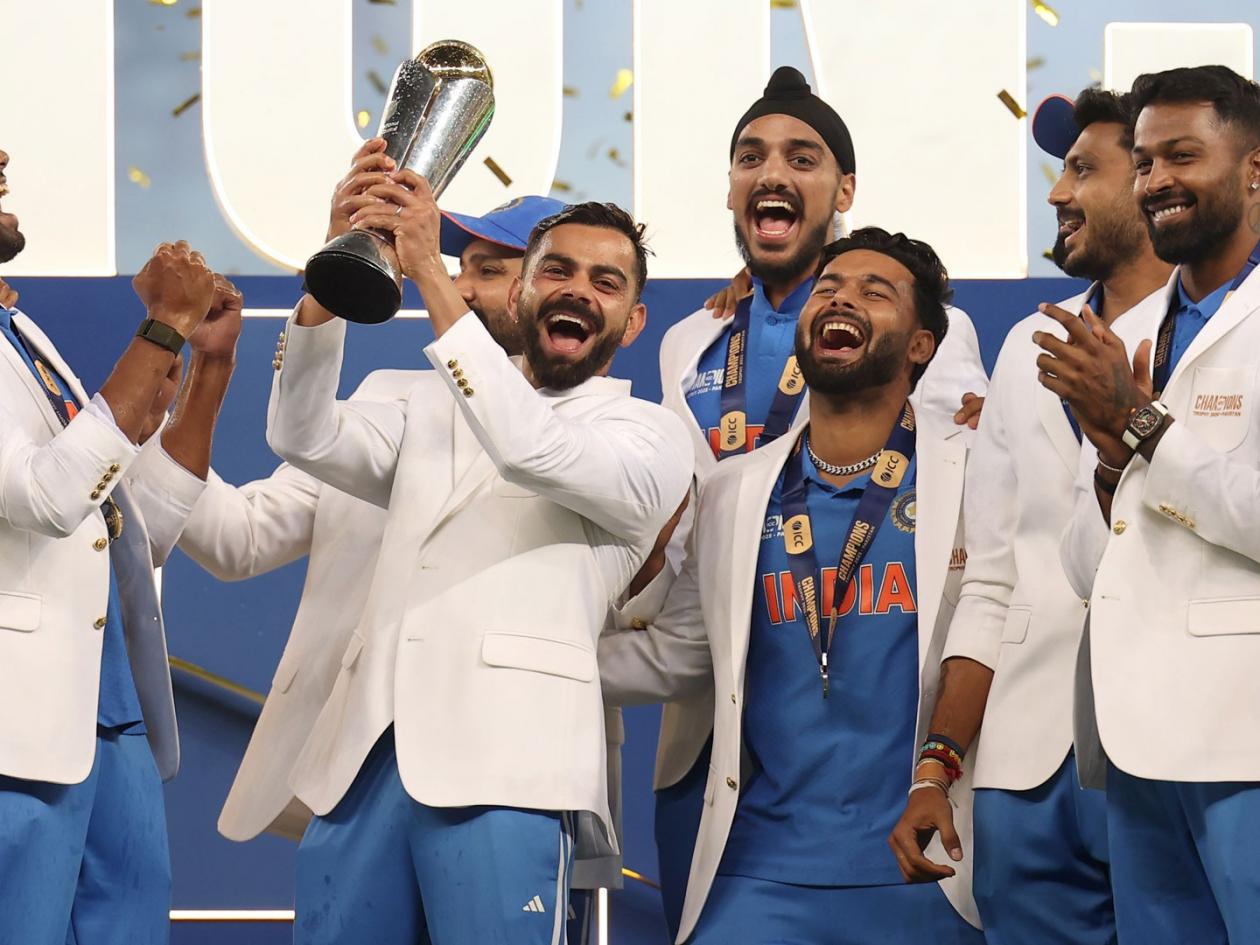
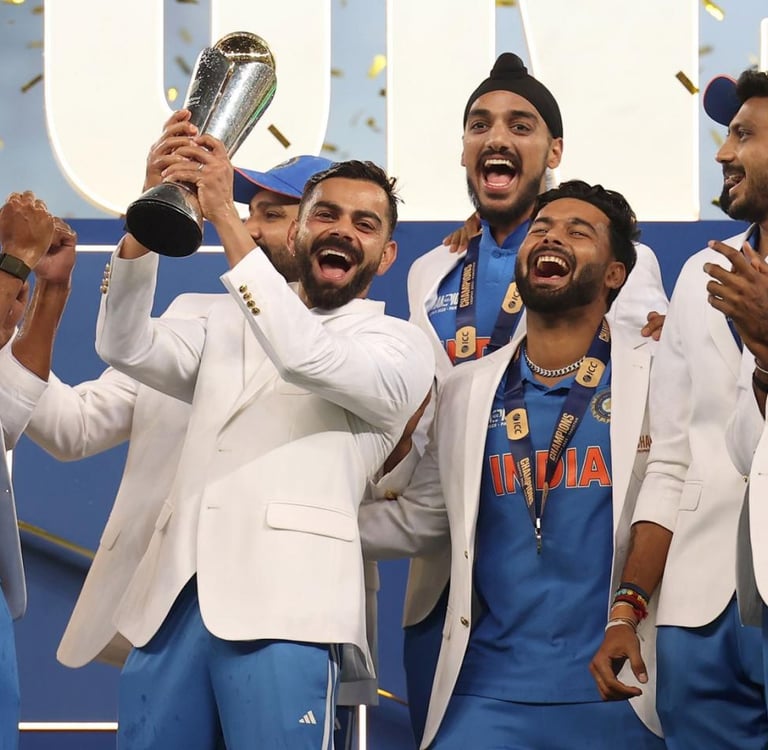
On March 9, 2025, the Indian men’s cricket team etched their name into the annals of cricketing history by clinching the ICC Champions Trophy 2025 title, defeating New Zealand by four wickets in a thrilling final at the Dubai International Cricket Stadium. This victory marked India’s third Champions Trophy triumph (after 2002, shared with Sri Lanka, and 2013), making them the most successful team in the tournament’s history, surpassing Australia’s two titles. Led by the astute captaincy of Rohit Sharma, India’s unbeaten run through the tournament showcased their depth, resilience, and adaptability, cementing their status as a powerhouse in One Day International (ODI) cricket.
The ninth edition of the ICC Champions Trophy, co-hosted by Pakistan and the United Arab Emirates from February 19 to March 9, 2025, was a tournament of high stakes and dramatic moments. With India’s matches played exclusively in Dubai due to geopolitical considerations, the team navigated a challenging path to the final, overcoming top-tier opponents with a blend of seasoned brilliance and youthful exuberance. This article delves into India’s victorious campaign, highlighting the key moments that defined their journey to the coveted white jackets.
The Backdrop: A Tournament of Challenges and Anticipation
The 2025 ICC Champions Trophy returned after an eight-year hiatus, last staged in 2017 when Pakistan emerged victorious. Pakistan, as defending champions, hosted the majority of the tournament across Lahore, Karachi, and Rawalpindi, while Dubai served as a neutral venue for India’s fixtures following the Board of Control for Cricket in India (BCCI)’s decision not to travel to Pakistan due to security concerns. The tournament featured eight teams split into two groups: Group A (India, Pakistan, New Zealand, Bangladesh) and Group B (Afghanistan, Australia, England, South Africa). The top two teams from each group advanced to the semi-finals, setting the stage for a fiercely competitive 19-day cricketing spectacle.
India entered the tournament as favourites, buoyed by their unbeaten triumph in the ICC Men’s T20 World Cup 2024 just eight months prior. With a squad blending experience (Rohit Sharma, Virat Kohli, Mohammed Shami) and emerging talent (Shubman Gill, Varun Chakaravarthy), the Men in Blue were determined to reclaim the Champions Trophy, a title they last won in 2013 under MS Dhoni.
Group Stage: A Dominant Start
India’s campaign kicked off on February 20, 2025, against Bangladesh in Dubai. Bangladesh opted to bat first, India chased Bangladesh’s total of 228, driven by Shubman Gill’s stellar century (101 off 129 balls) and Rohit Sharma’s aggressive 41 off 36 balls. Mohammed Shami’s return to the side was marked by a fiery 5/53, dismantling Bangladesh’s batting line-up as they were bowled out for 228 in 49.4 overs. This victory by 6 wickets set the tone for India’s campaign, showcasing their batting depth and bowling prowess.
The marquee clash against arch-rivals Pakistan followed on February 23. Played in Dubai amid palpable tension, Pakistan elected to bat first. Pakistan managed 241 in 49.4 overs, with Saud Shakeel’s 62 providing resistance against a disciplined Indian attack led by Kuldeep Yadav (3/40). In response, Virat Kohli’s masterful 82nd international hundred (100 off 111 balls) anchored India’s chase, supported by Shreyas Iyer’s steady 56. India reached 244/4 in 42.3 overs, securing a six-wicket win and asserting their dominance over Pakistan, who would later falter and exit in the group stage.
The group stage concluded with a crucial encounter against New Zealand on March 2nd. India posted 249/9, with Shreyas Iyer’s 79 proving pivotal. New Zealand’s chase was a tense affair, but Varun Chakravarty’s 5 wicket haul helped India beat New Zealand by 44 runs. Kane Williamson’s 81 briefly threatened India, but were bowled out for 205 in 45.3 overs. India’s composure under pressure ensured they topped Group A with an unbeaten record.
Semifinals: Overcoming the Australian Challenge
India faced Australia in the first semi-final on March 4 in Dubai, a rematch of past ICC knockout classics. Australia batted first, setting a competitive 264, bolstered by Steve Smith’s 73 and Alex Carey’s 61. India’s Mohammad Shami (3/48) and the spinners Varun Chakaravarthy (2/29) and Ravindra Jadeja (2/40), kept the scoring in check as they restricted Australia’s momentum.
The chase was a rollercoaster. India slumped to 134/3, with Virat Kohli’s 84 providing stability before his dismissal. Shreyas Iyer (45) and Hardik Pandya (28) played crucial roles in the chase and KL Rahul (42*) and Ravindra Jadeja (2*) held their nerve, and saw the game out. This victory propelled India into their third consecutive Champions Trophy final, underlining their clutch performance in knockout scenarios.
The Final: A Thrilling Climax Against New Zealand
The final on March 9 pitted India against New Zealand, who had advanced by defeating South Africa in the second semi-final. New Zealand, captained by Mitchell Santner, elected to bat first after winning the toss. They started briskly, with Will Young (15) and Rachin Ravindra (37 off 29). However, India’s spinners turned the tide. Varun Chakaravarthy dismissed Young lbw, while Kuldeep Yadav bowled Ravindra and caught-and-bowled Kane Williamson (11) in quick succession. Ravindra Jadeja trapped Tom Latham (14) lbw, and Glenn Phillips (34) fell to Chakaravarthy, leaving New Zealand at 165/5.
Daryl Mitchell’s gritty 63 off 101 balls and Michael Bracewell’s unbeaten 53 off 40 provided resistance, but India’s bowlers kept the pressure on. New Zealand finished at 251/7, a fighting total on a slowing Dubai pitch. Kuldeep (2/40) and Chakaravarthy (2/45) were the standout performers, with Shami (1/74) and Jadeja (1/30) chipping in effectively.
India’s chase began with intent, as Rohit Sharma unleashed an onslaught in the powerplay, racing to 76 off 83 balls. However, New Zealand fought back, with Bracewell dismissing Virat Kohli (1) lbw and Ravindra getting the wicket of Rohit via Latham stumping him. Shreyas Iyer (48) and Axar Patel (29) steadied the ship, but both fell in quick succession, leaving India at 203/5 in the 45th over. Hardik Pandya’s breezy 18 off 18 balls kept hopes alive, but his dismissal in the 48th over set up a tense finish: 7 runs needed off 12 balls.
KL Rahul (34*) and Ravindra Jadeja (9*) rose to the occasion. With 2 runs needed, Jadeja smashed Will O’Rourke’s delivery to the boundary, sealing a four-wicket victory with 6 balls to spare. Rohit Sharma’s 76 earned him the Player of the Match award, while Rachin Ravindra’s 263 runs in the tournament secured him the Player of the Tournament honors.
Key Moments of the Tournament
Shami’s Fiery Return (vs. Bangladesh): Mohammed Shami’s 5/53 in the opener signaled India’s bowling intent, dismantling Bangladesh and boosting team morale.
Kohli’s 82nd Hundred (vs. Pakistan): Virat Kohli’s century against Pakistan was a masterclass, silencing doubters and proving his enduring class in high-pressure games.
Rohit’s Powerplay Assault (Final): Sharma’s 76 in the final, particularly his dominance in the first 10 overs, gave India a platform to chase 253 against a disciplined New Zealand attack.
Spinners’ Stranglehold (Final): Kuldeep Yadav and Varun Chakaravarthy’s middle-over breakthroughs restricted New Zealand, turning a potential 280+ total into a manageable 251.
Rahul-Jadeja Finish (Semifinal and Final): KL Rahul’s unbeaten knocks in the semi-final (42*) and final (34*), alongside Jadeja’s composure, underscored India’s ability to close out tight chases.
The Aftermath: Legacy and Reflections
India’s 2025 Champions Trophy win was their second consecutive ICC title, following the T20 World Cup 2024, and their seventh overall, trailing only Australia (10). The victory highlighted the team’s evolution under Rohit Sharma, whose leadership blended aggression with tactical acumen. Virat Kohli, part of the 2013-winning squad, added another feather to his cap, while emerging stars like Shubman Gill and Varun Chakaravarthy signalled a bright future.
For New Zealand, the loss was a bitter pill, their second Champions Trophy final defeat (after 2000). Despite Matt Henry’s tournament-leading wickets and Ravindra’s all-round brilliance, they fell short in the clutch moments.
The tournament also showcased cricket’s evolving dynamics. Pakistan’s early exit as defending champions, Afghanistan’s debut win over England, and India’s dominance in Dubai underscored the sport’s unpredictability and depth. The hybrid model, necessitated by India-Pakistan tensions, proved a logistical success, ensuring the tournament’s integrity.
India’s ICC Champions Trophy 2025 triumph was a testament to their skill, resilience, and unity. From Shami’s opening salvo to Rahul and Jadeja’s final flourish, the campaign was punctuated by moments of brilliance that captivated fans worldwide. As the team donned the iconic white jackets on, they not only celebrated a historic victory but also reinforced their legacy as ODI cricket’s preeminent force. For Indian cricket, this was more than a trophy—it was a statement of intent for the years ahead.