
Shaidorov’s Seoul Symphony
A Historic Victory for Kazakhstan at the Four Continents Championships
AROUND THE GLOBEOFF THE FIELD
3/28/20254 min read
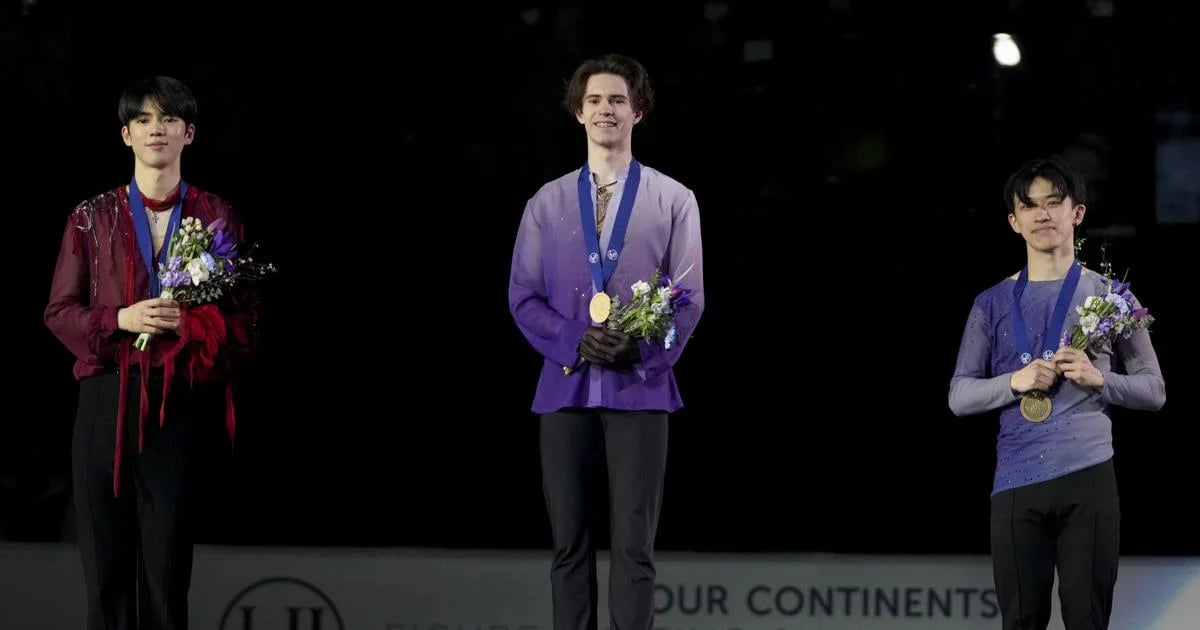
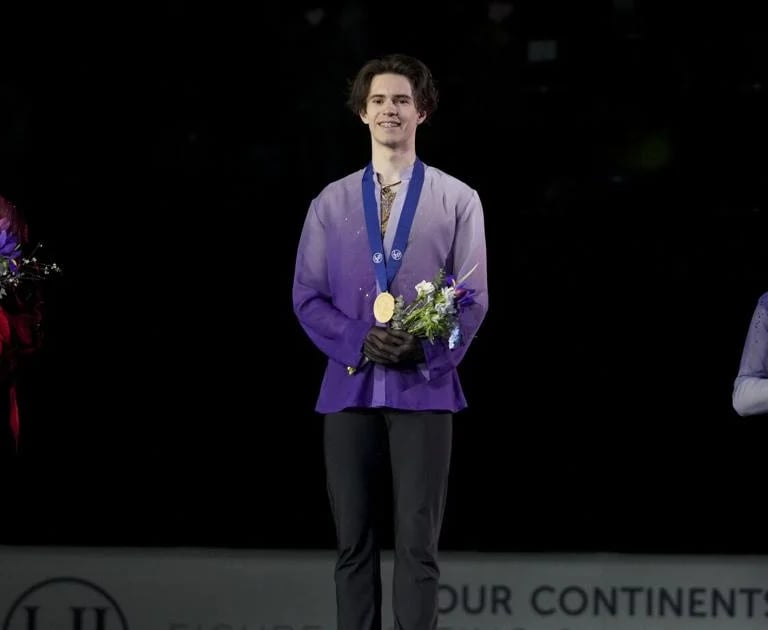
On February 22, 2025, Mikhail Shaidorov etched his name into the annals of Kazakhstan’s sporting history by clinching the men’s title at the ISU Four Continents Figure Skating Championships in Seoul, South Korea. The 20-year-old skater’s victory was not just a personal milestone but a national triumph, marking Kazakhstan’s first men’s title at this prestigious competition since the legendary Denis Ten’s win in 2015. Shaidorov’s journey to the podium was a testament to resilience, technical brilliance, and an unwavering spirit, overcoming a mid-performance setback to deliver a career-defining performance that resonated far beyond the ice rink at the Mokdong Ice Rink.
The Road to Seoul
Born in Almaty, Kazakhstan, Mikhail Shaidorov emerged as a promising talent in a nation with a burgeoning figure skating tradition. Kazakhstan’s skating legacy owes much to Denis Ten, a bronze medallist at the 2014 Winter Olympics, whose untimely death in 2018 left a void in the sport. Shaidorov, often seen as a spiritual successor to Ten, began skating at a young age, honing his craft under the guidance of coaches who recognized his potential to blend artistry with athleticism—a hallmark of Kazakhstan’s skating style.
The Four Continents Championships, an annual competition organized by the International Skating Union (ISU), brings together top skaters from non-European nations, including the Americas, Asia, Africa, and Oceania. For Shaidorov, the 2025 edition in Seoul represented an opportunity to step out of the shadows and assert himself on the international stage. Leading up to the event, he had shown flashes of brilliance in domestic and regional competitions, but Seoul would be his proving ground.
A Performance for the Ages
Shaidorov entered the championships as a dark horse, facing stiff competition from seasoned skaters like Japan’s Shun Sato, Canada’s Roman Sadovsky, and South Korea’s own Cha Jun-hwan, a crowd favourite. The men’s event unfolded over two days, with the short program on February 21 setting the stage for the decisive free skate on February 22.
In the short program, Shaidorov delivered a clean and emotionally charged performance to a haunting rendition of Asturias by Isaac Albéniz, landing a triple Axel and a triple Lutz-triple toe combination with precision. His score of 95.34 placed him in second behind Sato, setting up a thrilling duel in the free skate.
The free skate, however, was where Shaidorov’s mettle was truly tested. Skating to a medley from The Phantom of the Opera, he opened with a soaring quadruple Salchow, a jump that has become a cornerstone of his technical arsenal. But midway through the program, disaster struck: a technical glitch caused his music to stop abruptly. For a fleeting moment, the rink fell silent, and the audience held its breath. Under ISU rules, skaters are allowed to restart in such instances, but Shaidorov chose to press on, relying on muscle memory and the rhythm in his head to complete the routine.
What followed was nothing short of extraordinary. Shaidorov nailed a quad toe-triple toe combination, followed by a triple Axel-double toe, and capped the performance with a series of intricate spins and a dramatic final pose as the music belatedly resumed. The crowd erupted, and the judges rewarded his composure and execution with a free skate score of 189.76—the highest of the night. His total score of 285.10 edged out Sato (283.45) and secured the gold, making him the first Kazakhstani man to win the title in a decade.
A Historic Milestone
Shaidorov’s victory was laden with symbolism. At 20, he became one of the youngest champions in the competition’s history, signalling the arrival of a new generation of skaters from Kazakhstan. His win echoed Denis Ten’s triumph in 2015, a poignant reminder of the nation’s enduring legacy in the sport. Ten, who had been a mentor figure to many young Kazakh skaters, was celebrated posthumously through Shaidorov’s success, with fans and commentators noting the parallels in their lyrical skating styles and fearless approaches.
The significance of the win extended beyond the ice. Kazakhstan, a country of 19 million, has invested heavily in winter sports infrastructure, particularly in Almaty, which hosted the 2017 Winter Universiade and has bid for future Olympic Games. Shaidorov’s triumph in Seoul bolstered Kazakhstan’s reputation as a rising power in figure skating, a sport often dominated by traditional giants like Japan, the United States, and Canada.
Overcoming Adversity
The music malfunction during the free skate could have derailed a lesser skater, but Shaidorov’s ability to adapt underscored his mental fortitude. Post-event interviews revealed his mindset: “When the music stopped, I just told myself to keep going. I’ve practiced this program so many times—I knew every beat, every step. I couldn’t let it stop me.” His coach, Alexei Urmanov—a veteran of the sport—praised his pupil’s resilience, calling it “a champion’s response to chaos.”
This moment also highlighted the human element of figure skating, a sport that demands both physical precision and emotional storytelling. Shaidorov’s decision to continue without pause turned a potential flaw into a narrative of triumph, earning him not just points but the admiration of fans worldwide.
Global Reaction and Future Prospects
The skating community wasted no time in celebrating Shaidorov’s feat. Social media platforms buzzed with praise, with posts calling him “Kazakhstan’s new ice king” and “a star reborn.” ISU officials lauded the performance as one of the standout moments of the 2025 season, while analysts began speculating about his potential at the World Championships in Boston in March.
For Kazakhstan, the victory sparked national pride. President Kassym-Jomart Tokayev sent a congratulatory message, stating, “Mikhail’s success is a source of inspiration for our youth and a testament to the strength of our nation’s spirit.” In Almaty, where Shaidorov trains, local media reported plans for a hero’s welcome, with young skaters already citing him as their idol.
Looking ahead, Shaidorov’s trajectory appears bright. His technical repertoire—quad jumps, intricate spins, and a triple Axel of rare consistency—positions him as a contender for Olympic glory in 2026. Yet, it’s his artistry, reminiscent of Ten’s poetic performances, that sets him apart. If Seoul was any indication, Shaidorov is not just a skater to watch but a force poised to redefine Kazakhstan’s place in the sport.
Legacy in the Making
Mikhail Shaidorov’s gold medal at the 2025 Four Continents Championships was more than a singular achievement; it was a bridge between Kazakhstan’s past and future in figure skating. By overcoming adversity and delivering a season-best performance under pressure, he honoured Denis Ten’s legacy while carving out his own. As the ice settles in Seoul, the world now turns its eyes to this young Kazakh star, whose historic win on February 22, 2025, may well be the prelude to an even greater story.