
Sadio’s Farewell, Senegal’s Coronation
Champions of Africa 2025
1/19/20264 min read
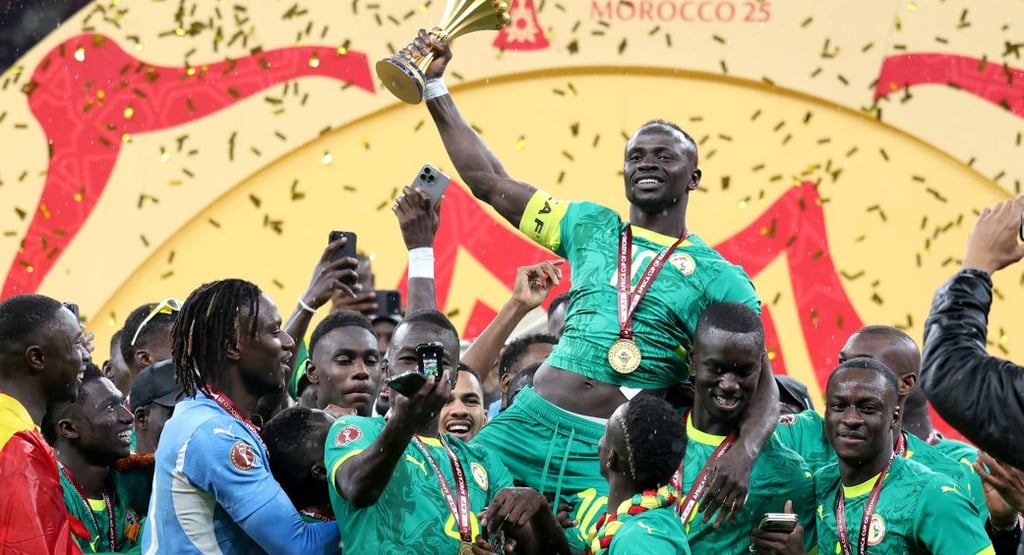
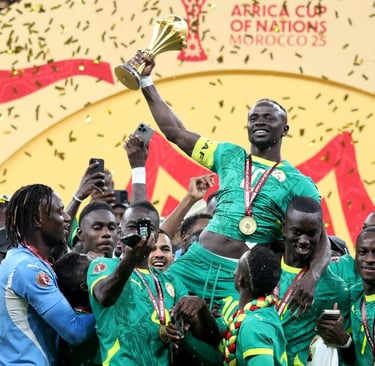
In a finale that will be etched into the annals of African football history, Senegal emerged victorious in the 2025 Africa Cup of Nations (AFCON), defeating hosts Morocco 1-0 after extra time on January 18, 2026, at the Prince Moulay Abdellah Stadium in Rabat. This hard-fought win marked Senegal's second AFCON title, following their breakthrough triumph in 2021, solidifying the Teranga Lions' status as one of the continent's dominant forces. The victory was not just a sporting achievement but a testament to resilience, national pride, and the unyielding spirit of a team that overcame controversy, adversity, and the weight of expectations to lift the coveted trophy.
The 35th edition of the TotalEnergies Africa Cup of Nations, hosted by Morocco for the second time since 1988, ran from December 21, 2025, to January 18, 2026, featuring 24 teams competing across six cities. Morocco, buoyed by their home advantage and a talented squad, were favourites, but Senegal's journey showcased tactical brilliance and individual heroics. The tournament's top scorer was Morocco's Brahim Díaz with five goals, while Senegal's Sadio Mané was named Best Player, underscoring his pivotal role. Nigeria secured third place after a 0-0 draw with Egypt, winning 4-2 on penalties.
Senegal's path to glory began in Group D, where they topped the standings with seven points from two wins and a draw. Their campaign kicked off with a convincing 3-0 victory over Botswana in Tangier, where Chelsea forward Nicolas Jackson netted a brace, and Cherif Ndiaye added a late goal. A 1-1 draw against DR Congo followed, with Mané scoring for Senegal before Cédric Bakambu equalized. They sealed the group with another 3-0 win against Benin, courtesy of goals from Abdoulaye Seck, Habib Diallo, and Cherif Ndiaye's penalty. This strong group performance set the tone, demonstrating defensive solidity and attacking flair under coach Pape Thiaw.
In the knockout stages, Senegal's resolve shone brighter. The round of 16 saw them dispatch Sudan 3-1, with Villarreal midfielder Pape Gueye delivering a brace and Mbaye added a 3rd. The quarter-finals brought a tense 1-0 win over Mali, thanks to Iliman Ndiaye's 27th-minute strike. The semi-final against Egypt was equally gritty, with Mané's 78th-minute goal securing a 1-0 victory and a spot in the final. Throughout, Mané's leadership and Gueye's midfield prowess were instrumental, while goalkeeper Édouard Mendy's saves proved crucial.
The final against Morocco was a spectacle of drama, tension, and controversy. For 90 minutes, the match remained goalless, with both sides creating chances but failing to convert. In the dying moments of stoppage time, Senegal thought they had won when Ismaïla Sarr scored, but referee Jean-Jacques Ndala disallowed it for a foul by Seck on Achraf Hakimi, ruling the whistle had blown before the goal. Moments later, Morocco was awarded a penalty after a VAR review for a foul on Díaz by El Hadji Malick Diouf. Outraged, Senegal's players, led by coach Thiaw, walked off the pitch in protest, delaying the game for about 15 minutes. Senegalese fans attempted a pitch invasion, throwing objects and clashing with security, leading to arrests and injuries.
The match resumed, and Díaz's panenka penalty was comfortably saved by Mendy, sending the game to extra time. In the 94th minute, Gueye unleashed a thunderous strike to give Senegal the lead, which they held for a 1-0 win. The goal sparked wild celebrations among Senegal's players and fans, contrasting with Morocco's heartbreak.
Key figures defined this victory. Mané, at 33, was the heartbeat of the team, earning Best Player honours and later announcing his retirement from international football, stating, "I would love to play again, but unfortunately this is my last. I will always be the 12th man." Gueye's heroics in the final and earlier rounds made him a national icon, while Mendy's penalty save was pivotal. Coach Thiaw, despite post-match sanctions, praised his team's spirit. Tragically, captain Kalidou Koulibaly lost his father shortly after the win, adding a poignant layer to the celebrations.
The significance of this victory extends far beyond the pitch. For Senegal, it represents a golden era in football, with two titles in four years, inspiring a nation of 17 million and boosting youth development programs. Beating the hosts, who had invested heavily in infrastructure and were semi-finalists at the 2022 World Cup, amplified the achievement. It highlighted Senegal's tactical discipline and mental fortitude, especially amid the final's chaos, which some saw as a stand against perceived injustices. On a broader scale, the win reinforces Africa's footballing depth, challenging traditional powerhouses and promoting unity, even as the controversy sparked debates on refereeing and sportsmanship.
Reactions were polarized. Senegalese fans flooded Dakar's streets in jubilation, with thousands celebrating the team's return. President Bassirou Diomaye Faye hailed it as a "victory for the people." Morocco's coach Regragui called Senegal's walk-off "shameful," while FIFA president Gianni Infantino condemned the "ugly scenes." CAF rejected Morocco's appeal to overturn the result, confirming Senegal as champions but imposing fines: $500,000 on Senegal's federation, $100,000 and a five-match ban on Thiaw, and fines on players Sarr and Ndiaye. Senegal accepted the sanctions without appeal, focusing on the triumph. CAF also cleared referee Ndala of any wrongdoing.
Despite the blemishes, Senegal's AFCON 2025 win is a story of perseverance. It cements their legacy, inspires future generations, and reminds the world of football's power to unite and divide. As Mané bows out on the highest note possible, a new chapter begins for the Teranga Lions, who roar louder than ever as Africa's champions.