
Rugby: The Rough-and-Tumble Tale of a Global Sport
THE PLAYBOOK
Rugby, a sport that combines raw physicality with strategic finesse, has captivated millions worldwide with its bone-crunching tackles and exhilarating tries. From muddy school fields in England to packed stadiums in New Zealand, rugby’s journey from a chaotic pastime to a global phenomenon is as gripping as a last-minute match-winning scrum. This article traces the origins of rugby, exploring how a single rebellious act sparked a sport that thrives on camaraderie, resilience, and sheer grit.
The story of rugby begins in 1823 at Rugby School, a prestigious institution in Warwickshire, England. Legend has it that during a game of football (soccer, as we know it today), a young student named William Webb Ellis, frustrated by the rules, picked up the ball and ran with it. This audacious act, though likely apocryphal, is credited as the birth of rugby. The tale, embellished over time, became the sport’s founding myth, immortalized by a plaque at Rugby School and celebrated annually in the Rugby World Cup’s Webb Ellis Trophy.
While the Ellis story is charming, rugby’s true origins are more complex. In the early 19th century, various forms of “folk football” were played across Britain, each with its own loose rules. These games, often violent and played by entire villages, involved carrying or kicking a ball toward a goal. Rugby School’s version began to formalize these chaotic contests, emphasizing physicality and ball-carrying. By the 1830s, students had codified rules, including the allowance of tackling and scrummaging, setting the game apart from the kicking-focused football of the time.
The sport’s defining moment came in 1871 when the Rugby Football Union (RFU) was formed in London, standardizing rules and distinguishing rugby from association football (soccer). The RFU’s establishment marked rugby’s transition from a schoolboy lark to an organized sport. Clubs sprang up across Britain, and the game spread to universities and public schools, where it became a symbol of muscular Christianity—a Victorian ideal blending physical prowess with moral discipline.
Rugby’s global spread followed the British Empire’s reach. By the late 19th century, the sport had taken root in Australia, New Zealand, and South Africa, where it became a cultural cornerstone. New Zealand’s All Blacks, with their iconic haka, emerged as a powerhouse, embodying rugby’s blend of tradition and intensity. In the Northern Hemisphere, France embraced the game, adding flair to its rugged framework. Meanwhile, rugby found fertile ground in places like Fiji and Samoa, where its physical demands resonated with local warrior traditions.
The sport’s evolution wasn’t without conflict. In 1895, a schism led to the creation of rugby league, a faster-paced variant, when northern English clubs broke away over payment disputes, leaving rugby union as the amateur code. Rugby union remained dominant globally and turned professional in 1995, ushering in a new era of athleticism and commercial growth. Today, the Rugby World Cup, first held in 1987, is a global spectacle, with nations like South Africa, New Zealand, and England vying for supremacy.
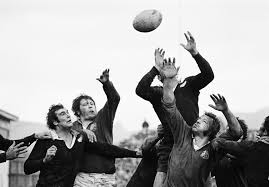
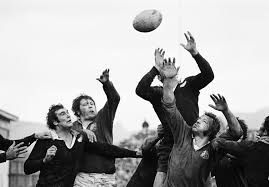
Rugby’s appeal lies in its raw intensity and inclusivity. Unlike many sports, it accommodates players of all shapes—nimble wingers, hulking forwards, and tactical fly-halves—each vital to the team’s success. The scrum, a unique contest of strength, and the lineout, a test of precision, showcase rugby’s blend of power and strategy. Off the field, the sport fosters a sense of community, with players and fans sharing post-match drinks, win or lose.
Today, rugby faces challenges, including concerns over player safety due to its physical nature and efforts to expand its reach beyond traditional strongholds. Innovations like World Rugby’s law changes aim to balance safety with the game’s essence. Meanwhile, women’s rugby is surging, with events like the Women’s Rugby World Cup gaining prominence.
From a schoolboy’s impulsive dash to a global sport uniting millions, rugby’s journey reflects its core values: resilience, teamwork, and passion. Whether it’s a local club match or a World Cup final, rugby remains a celebration of grit and glory, proving that sometimes, breaking the rules can create something extraordinary.
CONTACT US
Reach out for stories, tips, or feedback.
info@worldofsportsmagazine.net
© 2026 World of Sports. All rights reserved.
Get the latest sports news straight to your inbox