
Martina Navratilova: The Pioneer Who Rewrote Tennis History
LEGENDS OF THE GAME
1/7/20265 min read
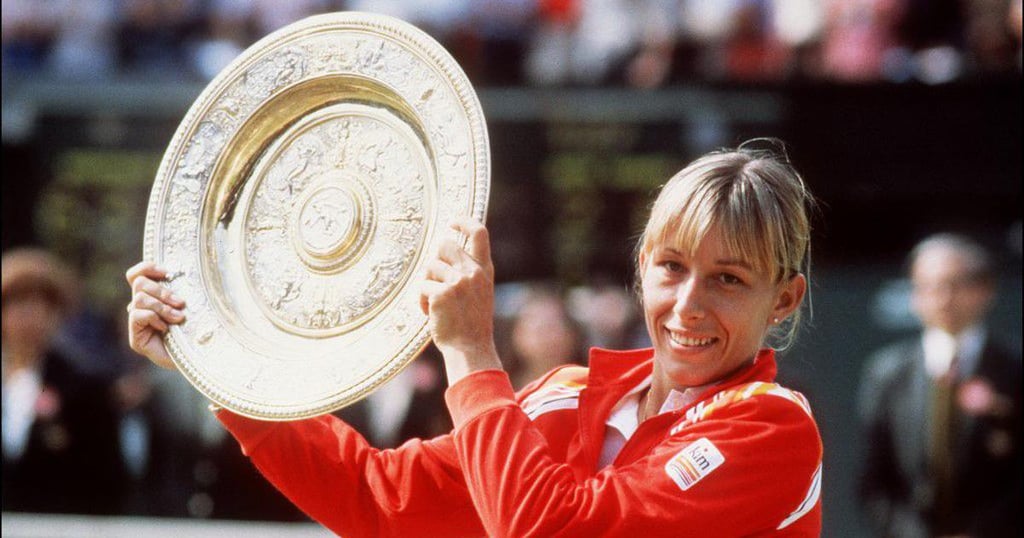
In the annals of tennis, few names evoke as much reverence and awe as Martina Navratilova. With a career that spanned four decades, she didn't just play the game—she revolutionized it. Armed with a lethal left-handed serve-and-volley style, unparalleled athleticism, and an unyielding competitive spirit, Navratilova amassed a staggering 59 Grand Slam titles, including a record nine Wimbledon singles crowns. She shattered records, defied expectations, and paved the way for future generations of athletes, both on and off the court. But her story is more than a tally of trophies; it's a tale of defiance, resilience, and advocacy that transcended sports. From defecting from communist Czechoslovakia as a teenager to becoming a vocal champion for LGBTQ+ rights, Navratilova rewrote tennis history while challenging societal norms. As we delve into her extraordinary journey, it's clear why she's hailed as one of the greatest athletes of all time.
Early Life and the Bold Defection
Martina Navratilova was born on October 18, 1956, in Prague, Czechoslovakia (now the Czech Republic), into a family with a sporting lineage. Her parents divorced when she was young, and her mother remarried Miroslav Navratil, a ski instructor who became her stepfather and from whom she took her surname. Tennis entered her life early; by age four, she was hitting balls against a wall, and she began playing regularly from age seven. Under the guidance of coach George Parma, Navratilova quickly rose through the ranks, becoming the top-ranked player in Czechoslovakia from 1972 to 1975.
The political climate of communist Czechoslovakia, however, stifled her ambitions. The government imposed strict controls on athletes, limiting international travel and dictating training regimens. In 1975, at just 18 years old, Navratilova made a life-altering decision during the U.S. Open in New York. After leading her team to victory in the Federation Cup, she defected to the United States, seeking freedom and the opportunity to pursue her career without restrictions. The Czech authorities stripped her of her citizenship in retaliation, leaving her stateless and alone in a new country. It was a gamble that could have ended her dreams, but instead, it ignited her ascent to stardom. She became a U.S. citizen in 1981 and later regained her Czech citizenship in 2008, embracing dual nationality.
This bold move wasn't without hardship. Navratilova arrived in America with little money and faced cultural adjustments, including a brief struggle with weight due to the abundance of fast food. Yet, her determination shone through. Turning professional in 1975, she quickly established herself among the elite, reaching the finals of the Australian Open and French Open that year.
Breaking Through: The Early Career Surge
Navratilova's breakthrough came in 1978 when she captured her first Grand Slam singles title at Wimbledon, defeating Chris Evert in a thrilling final. That victory propelled her to the world No. 1 ranking for the first time, a position she would hold for a total of 332 weeks in singles—the second-longest tenure in history. The following year, she defended her Wimbledon crown and added the doubles title, signalling the start of her dominance.
Her rivalry with Evert became the stuff of legend, defining women's tennis in the 1970s and 1980s. The two clashed 80 times, with Navratilova edging out a 43-37 advantage. Evert's baseline precision contrasted sharply with Navratilova's aggressive net play, creating epic battles that drew massive audiences and elevated the sport's popularity. Matches like their 1985 French Open final, where Navratilova triumphed in three sets, showcased the intensity of their competition.
By the early 1980s, Navratilova had transformed her game. Hiring trainer Nancy Lieberman and nutritionist Robert Haas, she adopted a rigorous fitness regimen that included weight training and a vegetarian diet—innovations that set new standards for athletic preparation in women's tennis. This edge paid off spectacularly.
Dominance and Record-Breaking Achievements
The 1980s were Navratilova's golden era. In 1982, she won 90 of 93 matches, claiming 15 tournaments, including Wimbledon and the French Open. The next year was even more astonishing: an 86-1 record, with victories at Wimbledon, the U.S. Open, and the Australian Open. From 1983 to 1984, she strung together six consecutive Grand Slam singles titles, a feat unmatched in the Open Era.
Her Wimbledon supremacy is unparalleled: nine singles titles between 1978 and 1990, including six in a row from 1982 to 1987. Overall, she secured 18 Grand Slam singles titles—four U.S. Opens (1983, 1984, 1986, 1987), three Australian Opens (1981, 1983, 1985), and two French Opens (1982, 1984). But Navratilova was no one-trick pony; her doubles prowess was equally legendary. Partnering with Pam Shriver, she won 31 women's doubles Grand Slams, including a calendar-year Grand Slam in 1984. Adding 10 mixed doubles titles, her total of 59 majors places her second all-time behind Margaret Court.
Navratilova's records extend beyond Slams. She won 167 singles titles and 177 doubles titles, the most in Open Era history. Her 74-match winning streak in 1984 remains a benchmark, and she was named WTA Player of the Year seven times. In 1987, she became the first player since 1970 to win the U.S. Open triple crown—singles, doubles, and mixed doubles. Even in her later years, she defied age: at 46, she won the 2003 Wimbledon mixed doubles, and at 49, the 2006 U.S. Open mixed doubles, becoming the oldest Grand Slam champion ever.
Personal Life and Trailblazing Advocacy
Off the court, Navratilova's life was as groundbreaking as her play. In 1981, she became one of the first major athletes to come out publicly, initially identifying as bisexual (and later as lesbian), a courageous act at a time when it could—and did—cost her endorsements. Undeterred, she embraced activism, fighting Colorado's anti-gay Amendment 2 in 1992 and speaking at the 1993 March on Washington for LGBTQ+ rights. Her advocacy extended to gender equality, animal rights, and environmental causes. While a longtime champion for LGBTQ+ rights, her opposition since 2019 to transgender women competing in elite women's sports—citing fairness and physical advantages—has sparked significant debate and criticism from some in the community.
Navratilova's personal relationships reflected her openness. After high-profile romances, including with basketball star Nancy Lieberman and author Rita Mae Brown, she married Russian model Julia Lemigova in 2014. The couple, who met in 2000, raised Lemigova's two daughters together in Miami.
Battles Beyond the Court: Health and Resilience
Navratilova's resilience was tested beyond tennis. In 2010, she was diagnosed with non-invasive breast cancer, undergoing a lumpectomy and radiation. She returned to the court as a commentator shortly after. More challengingly, in January 2023, she faced simultaneous diagnoses of stage 1 throat cancer (HPV-related) and early-stage breast cancer. After intensive treatment, including proton therapy and chemotherapy, she announced she was cancer-free by mid-2023. These battles only amplified her voice on health awareness, urging regular checkups and early detection.
Legacy and Life After Tennis
Navratilova retired from singles in 1994 and fully from competition in 2006, but her influence endures. Inducted into the International Tennis Hall of Fame in 2000, she has authored books like her 1985 autobiography Martina and a mystery series featuring a tennis-pro-turned-sleuth. Today, she provides sharp commentary for the Tennis Channel, BBC, and Amazon Prime during majors. She appeared in Netflix's The Politician and continues global speaking engagements on equality and wellness.
Her legacy? Navratilova professionalized women's tennis, emphasizing fitness and strategy. She inspired players like Steffi Graf and Serena Williams, proving longevity and versatility. But perhaps her greatest rewrite of history was in advocacy—showing athletes could be agents of change.
Martina Navratilova didn't just win matches; she won hearts and minds, proving that true pioneers leave the game better than they found it. In a sport of grace and grit, she embodied both, forever etching her name in tennis lore.