
India’s Golden Era
The “Brazilians of Asia” Who Dazzled the World
TRADITION & HISTORY
2/12/20256 min read
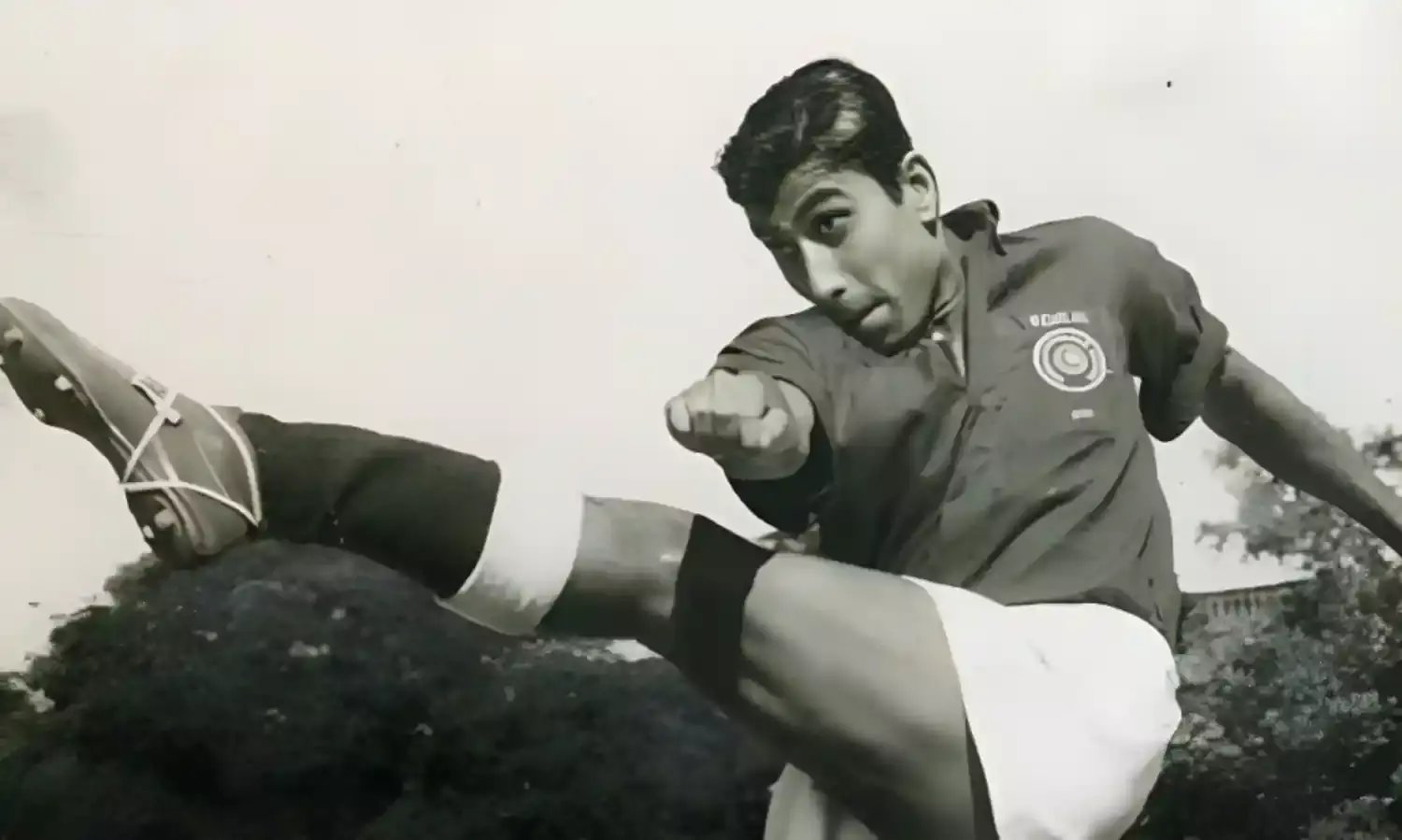
In the 1950s and ‘60s, Indian football carved out a fleeting but dazzling chapter in its history, earning the nickname “Brazilians of Asia” for a style that married flair with finesse. This wasn’t just hype—India backed it up with results, shining on international stages and leaving a legacy that still echoes today. From Olympic heroics to Asian dominance, this golden era was defined by barefoot brilliance, a visionary coach, and a striker who made history.
The pinnacle came at the 1956 Melbourne Olympics, where India announced themselves with a 4-2 demolition of Australia. The star of the show was Neville D’Souza, a lanky forward from Bombay who etched his name in the record books. D’Souza scored a hat-trick—the first by an Asian player at the Olympics—blending clinical finishing with raw tenacity. His goals stunned the hosts, and India’s fourth-place finish remains their finest global outing. What made it even wilder? They did it barefoot, weaving past booted opponents with a grace that defied logic. For a nation still finding its feet post-independence, this was a statement: India could play, and they could win.
Behind this magic was Syed Abdul Rahim, the architect of India’s rise. A soft-spoken tactician from Hyderabad, Rahim drilled his squad in a slick, short-passing game that baffled bigger teams. His 4-2-4 formation—years ahead of its time—relied on speed and teamwork, not brute force. Players like P.K. Banerjee and Chuni Goswami thrived under him, turning India into a unit that punched above its weight. Rahim’s vision wasn’t just about winning; it was about proving Indian football could match the world’s best.
Syed Abdul Rahim’s Tactical Blueprint
Rahim, a teacher-turned-coach from Hyderabad, wasn’t your typical side-line screamer. He was a thinker, a pioneer who fused discipline with creativity. His signature was the 4-2-4 formation—a setup Brazil later made famous—tailored to India’s strengths: speed, agility, and technical skill. Unlike the rigid British 2-3-5 still lingering in Asia, Rahim’s system was fluid, emphasizing movement over muscle. It was bold, almost reckless, but it worked.
The back four were a compact wall—two centre-backs and two full-backs who rarely overlapped, focusing on stability. Ahead, two midfielders acted as pivots, linking defence to attack with quick, precise passes. The real magic, though, was up top: four forwards, spread wide and interchanging positions, overwhelming defences with pace and numbers. Rahim drilled his players in short, sharp passing—think tiki-taka’s grandfather—exploiting gaps rather than hoofing long balls. For a barefoot team, this was genius; it minimized physical duels and maximized control.
Take the 1956 Olympic win over Australia. Neville D’Souza’s hat-trick wasn’t luck—he thrived in Rahim’s setup. The forwards stretched Australia’s backline, creating space for D’Souza to dart in and finish. P.K. Banerjee, a winger with a cannon shot, and Chunni Goswami, a versatile playmaker, roamed freely, pulling defenders out of shape. Rahim’s men didn’t just play; they orchestrated chaos, their barefoot agility letting them pivot and pass in tight spaces where boots might’ve stumbled.
Rahim’s training was relentless too. He’d run sessions twice daily, focusing on stamina and ball work. Players recall endless drills—pass, move, pass, move—until it was muscle memory. He scouted talent nationwide, plucking gems like Tulsidas Balaram from obscurity, and moulded them into a unit. His barefoot philosophy wasn’t stubbornness; it was strategy. Lighter and nimbler, his players could outmanoeuvre heavier, booted foes, especially on Asia’s uneven pitches.
Why It Worked Then
Rahim’s tactics clicked because they fit the moment. Post-independence India had a crop of hungry, fearless players—many from Kolkata and Hyderabad’s football-crazed streets. The barefoot edge gave them an identity, and Rahim’s system amplified their natural flair. Opponents, used to slower, physical games, couldn’t cope with India’s tempo. At the 1951 Asian Games, Iran’s rugged defence crumbled under Rahim’s passing barrage, losing 1-0 as India secured the gold medal in what was a historic moment in Indian football. In 1962 in the final, South Korea fell 2-1 to the same relentless rhythm.
He also had time to build. Rahim coached from 1950 to 1963, a rare stretch of continuity in Indian football. His Hyderabad Police team dominated domestically, giving him a lab to perfect his ideas before taking them national. Plus, football had cultural heft then—before cricket’s rise—drawing talent and support.
Why It Faded—and Can’t Be Replicated Easily
Rahim’s death in 1963 was a gut punch. No one inherited his tactical nous or authority. The AIFF, plagued by infighting and apathy, couldn’t sustain his vision. His 4-2-4 needed discipline and fitness—qualities that eroded as training lapsed and professionalism lagged. While Europe and South America evolved formations (4-4-2, 4-3-3), India stagnated, clinging to a system others had countered.
The barefoot advantage vanished too. As pitches standardized and boots improved, India’s edge dulled. Rahim’s successors didn’t adapt—long balls crept in, diluting the short-passing ethos. Infrastructure crumbled; academies never replaced street football’s organic pipeline. Cricket’s dominance after 1983 starved football of funds and focus—India’s sports budget remains a measly 0.1% of GDP, with football getting scraps.
Rahim’s holistic approach—scouting, training, tactics—has no parallel today. Coaches lack his tenure or resources, and players like Sunil Chhetri shine despite the setup. The AIFF’s latest roadmap shows promise—grassroots, leagues—but execution is key. Vietnam and Japan, with consistent investment, lap India now.
Rahim’s tactics were a perfect storm: right players, right time, right mind. His 4-2-4 turned India into Asia’s showmen, but without his glue, it fell apart. Replicating it means more than copying a formation—it’s about rebuilding a footballing soul. Until India finds another Rahim, and a system to back him, the “Brazilians of Asia” remain a beautiful memory.
The Aims and Aspirations of AIFF
The All India Football Federation (AIFF) has been working on several initiatives to lift Indian football from its current struggles and rebuild the kind of success seen in the 1950s and ‘60s golden era.
First, they’re doubling down on grassroots development. The AIFF’s “Vision 2047” roadmap, launched in 2023, aims to reach 35 million kids through village programs and get 25 million into football via schools. They’ve kicked off the Blue Cubs League for ages 4-12, using small-sided games—2v2, 5v5, 7v7—to hook kids early and build skills progressively. They’ve also declared June 23 as National Grassroots Football Day, tied to P.K. Banerjee’s birthday, to push participation nationwide. Recently, they got the green light from the Ministry of Education to integrate the FIFA-backed Football4Schools program, setting up a three-stage scouting system to feed talent into their first FIFA-AIFF academy.
Coaching’s another big focus. Rahim’s era showed what a sharp coach can do, and the AIFF wants to recreate that edge. They’re targeting 50,000 active coaches by 2047, with 4,500 holding at least a C-License. They’re boosting coach education, aiming for 200 educators (up from 58) and 25,000 coaches across all levels. This isn’t just talk—posts on social media from 2025 highlight the Technical Committee appointing figures like Subrata Paul as National Team Director and recommending Bibiano Fernandes for the U20 men’s team, showing a push to professionalize leadership.
Infrastructure’s a weak spot they’re tackling head-on. Plans include a National Centre of Excellence for both men’s and women’s teams, plus two FIFA-standard stadiums and a “mega football park.” The ISL’s brought some upgrades—better pitches, broadcast quality—but the AIFF knows rural areas need playable fields too. They’re nudging state governments and private investors with policy incentives to build more facilities.
The league structure’s getting a shake-up. For youth, they’ve introduced a tiered National Football Championship—Tier 1 for the top 16 teams, Tier 2 for the rest—starting in 2023. For pros, they’re aiming for a three-tier pyramid: ISL and I-League at 14 teams each, I-League 2nd Division at 12. Women’s football gets a four-level pyramid by 2026, topped by a 10-team Indian Women’s League. There’s debate over foreign player quotas—clubs want six, the AIFF’s leaning toward five—but the goal is clear: more homegrown talent in the mix.
Refereeing’s been a mess, and they’re fixing it. They’ve signed 50 pro referees since 2023 and are rolling out five Centres of Refereeing Excellence to train young officials, addressing a long-standing gripe about shaky calls in domestic games.
Money’s the backbone, and the AIFF’s chasing a 500% revenue jump by 2026. They’re banking on ISL growth, sponsorships, and turning India into a “talent hub” to draw global interest.
Finally, they’re exploring Persons of Indian Origin (PIO) players to boost the national team, though citizenship laws complicate it. A sub-committee’s digging into this, aiming to tap diaspora talent like Japan and Qatar have.
Will it work? The AIFF’s got big dreams—top four in Asia by 2047—but execution’s the catch. Rahim had a unified vision; today’s efforts feel ambitious, and cricket’s shadow still looms large. Still, these steps—grassroots, coaching, infrastructure, leagues—are a solid swing at reviving India’s football soul. Time will tell if they can pull it off.