
Engineering the Perfect Pitch
How Science Is Reinventing Football's Playing Surface
FIFA WORLD CUP 2026TECHNOLOGY & INNOVATION
6/5/20265 min read
Beneath every great match lies an extraordinary feat of biology, engineering and environmental science that is quietly transforming the future of football.
For generations, football supporters have judged a pitch with little more than their eyes. A flawless emerald surface suggested quality. A patchy field implied neglect. Yet beneath that carpet of grass lies one of the most sophisticated pieces of sports infrastructure ever developed.
The modern football pitch is no longer simply cultivated—it is engineered.
As the FIFA World Cup 2026 unfolds across 16 venues in Canada, Mexico and the United States, every playing surface represents years of scientific research, environmental modelling and precision engineering. Behind the scenes, agronomists, soil scientists, irrigation specialists, plant physiologists and data analysts are working with the same intensity as coaches and performance staff. Their objective is deceptively simple: produce a surface that performs identically regardless of climate, stadium architecture or match schedule.
In reality, achieving that consistency is one of sport's greatest engineering challenges.
The Pitch Is a Living Performance System
Unlike a synthetic athletics track or a hardwood basketball court, a football pitch is alive.
Grass continues to grow, respire and respond to changing environmental conditions throughout a tournament. Temperature, humidity, sunlight, rainfall, root development and player traffic constantly alter its characteristics.
For elite football, even subtle differences matter.
Ball roll, ball rebound, rotational traction and surface firmness all influence how the game is played. A pitch that is too soft can reduce speed and increase fatigue. One that is excessively hard may increase impact forces experienced by players. Poor traction can affect acceleration, cutting movements and stability.
Modern stadium agronomy therefore focuses not on producing the greenest pitch, but the most predictable one.
Consistency has become a performance variable.
Why Hybrid Grass Has Become Football's Gold Standard
Although artificial turf has become common in many sports facilities, FIFA requires natural grass playing surfaces for its men's World Cup matches.
That requirement has driven remarkable innovation.
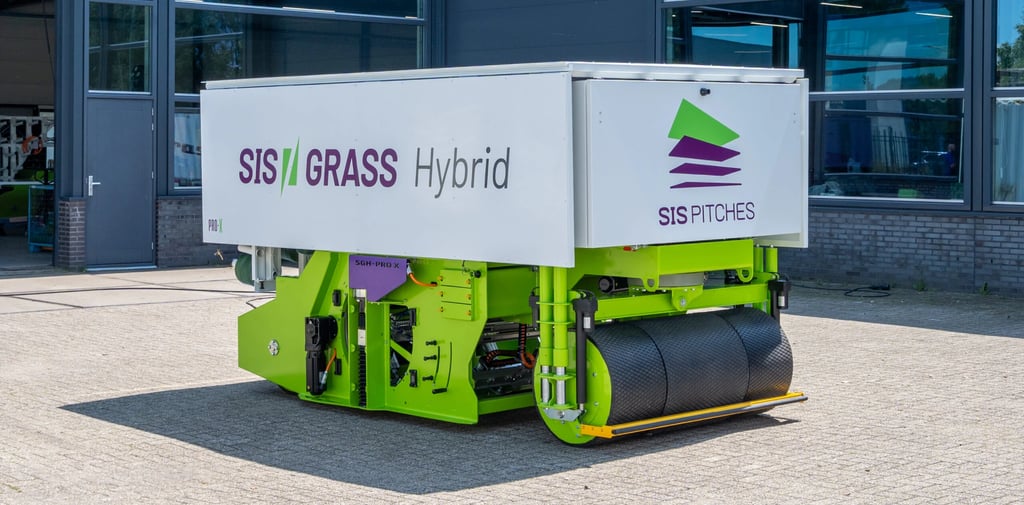
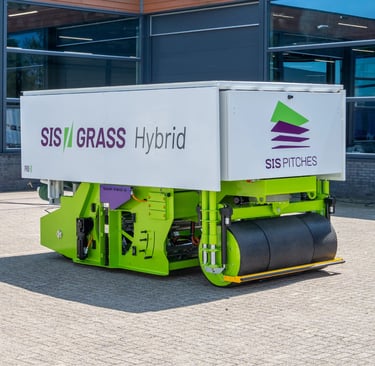
Many modern elite stadiums now use hybrid natural grass systems, in which millions of synthetic fibres are stitched vertically into the root zone while natural grass continues to grow around them. Rather than replacing living turf, the synthetic fibres reinforce it.
One of the world's leading providers, SIS Pitches, describes this technology as enabling natural grass to withstand greater levels of wear while preserving the playing characteristics expected at the highest levels of football.
The principle resembles reinforced concrete.
Concrete provides the mass, while steel adds structural strength. In hybrid pitches, living grass delivers the natural playing characteristics, while synthetic fibres improve stability and resistance to damage.
For players, the objective is straightforward: a natural surface that remains consistent throughout repeated training sessions and tournament matches.
FIFA's Pitch Research Project
Preparing 16 World Cup venues across three countries presented FIFA with an unprecedented challenge.
The tournament includes existing football stadiums, NFL venues and locations experiencing markedly different climatic conditions—from humid coastal environments to high-altitude cities and regions with intense summer heat.
To address these variables, FIFA launched its Pitch Research Project in collaboration with researchers from the University of Tennessee and Michigan State University.
Rather than treating every stadium identically, scientists studied how grass species, root-zone composition, irrigation methods and environmental conditions interacted at each venue. Research plots were established to evaluate different construction methods before tournament installation began.
This represented far more than groundskeeping.
It was an international scientific programme designed to understand how living turf performs under diverse climatic conditions while meeting the rigorous demands of elite competition.
Engineering What Lies Beneath
The visible grass represents only the final layer of a sophisticated engineered profile.
Beneath it lies a carefully designed root zone consisting of specialised sand-based growing media selected for drainage, oxygen availability and root development.
Traditional soil retains excessive water and compacts under repeated use.
Sand-based systems behave differently. Water drains more efficiently while allowing sufficient air movement around developing roots. Healthy roots improve turf resilience, enabling the grass to recover more quickly from intensive use.
Drainage networks beneath the surface further protect the pitch during heavy rainfall, while heating or ventilation systems may be incorporated in some stadiums to assist year-round turf management.
In modern football, engineering begins well below the surface.
Water, Measured with Precision
Irrigation has also evolved dramatically.
Grounds teams no longer rely solely on visual inspection or fixed watering schedules. Modern stadium management increasingly incorporates moisture monitoring technologies that measure water availability within the root zone.
These systems help grounds managers determine when irrigation is genuinely required rather than applying water according to routine.
The benefits extend beyond playing quality.
Precise irrigation supports healthier turf while reducing unnecessary water consumption—an increasingly important consideration as many sporting regions experience greater environmental stress and more frequent periods of drought.
For tournament organisers, sustainability and performance are becoming complementary rather than competing objectives.
Designing for Different Climates
One of the most remarkable aspects of the 2026 World Cup is the climatic diversity facing pitch managers.
Matches are staged from Canada's cooler environments to the subtropical heat of Mexico and the varied summer conditions found across the United States.
Grass that thrives in one location may struggle in another.
Agronomists therefore select turf varieties based on regional environmental conditions, including expected temperature ranges, sunlight exposure, humidity and seasonal growth patterns.
Even stadium architecture influences decisions.
Roof design, shading, airflow and reflected heat affect photosynthesis and turf growth. Some enclosed stadiums require sophisticated lighting systems that supplement natural sunlight to maintain healthy grass.
Every venue effectively becomes its own ecological system.
Protecting Players Through Better Surfaces
Playing surfaces influence far more than aesthetics.
Researchers continue investigating how surface characteristics affect biomechanics, movement efficiency and injury risk.
Rotational traction, for example, must strike a careful balance.
Too little traction may increase slipping. Excessive traction may increase loads transmitted through the lower limbs during rapid changes of direction.
Surface hardness also requires careful management. Excessively firm pitches alter impact forces, while overly soft surfaces can increase physical demands placed upon players.
Although injury risk depends upon multiple interacting factors—including fitness, workload, footwear, weather and match circumstances—the quality and consistency of the playing surface remain important components of athlete welfare.
For this reason, pitch management increasingly forms part of the broader performance ecosystem alongside sports medicine, nutrition and recovery science.
Data Joins the Grounds Team
Technology is also changing how pitches are managed during competition.
Environmental sensors, weather forecasting models and digital monitoring systems allow grounds managers to anticipate changing conditions rather than merely reacting to them.
Moisture levels, root-zone temperature and local weather forecasts can all inform irrigation decisions.
Some stadiums integrate these measurements into wider facility-management platforms that support operational planning throughout an event.
Artificial intelligence has not replaced the expertise of experienced agronomists.
Instead, data increasingly supports faster, more informed decisions in an environment where conditions can change rapidly.
The groundskeeper is becoming both horticultural specialist and data interpreter.
Building a Sustainable Legacy
Perhaps the greatest significance of FIFA's pitch research lies beyond the World Cup itself.
Knowledge developed through the Pitch Research Project will contribute to future tournament planning while benefiting clubs, leagues and stadium operators worldwide.
Improved irrigation techniques, better understanding of climate adaptation, advances in root-zone engineering and more resilient hybrid turf systems all have applications extending far beyond international football.
As climate variability increases, maintaining safe, consistent natural playing surfaces will become progressively more demanding.
The solutions developed today may shape football for decades.
The Hidden Science Beneath Every Match
Supporters will remember spectacular goals, dramatic saves and unforgettable celebrations from the 2026 FIFA World Cup.
Few will think about the scientists analysing root development, the engineers designing drainage systems or the agronomists monitoring moisture beneath the surface.
Yet every perfectly weighted pass, every controlled first touch and every decisive sprint begins with the same foundation.
The football pitch has become one of the world's most advanced living laboratories.
It is a place where biology meets engineering, where environmental science supports elite performance, and where millions of blades of grass—strengthened by invisible technology and guided by decades of research—create the stage upon which the world's greatest players perform.
The perfect pitch, it turns out, is not grown by nature alone.
It is engineered.