
Did Babe Ruth Really Call His Shot?
Unravelling the Legend of the 1932 World Series
TRADITION & HISTORY
6/5/20253 min read
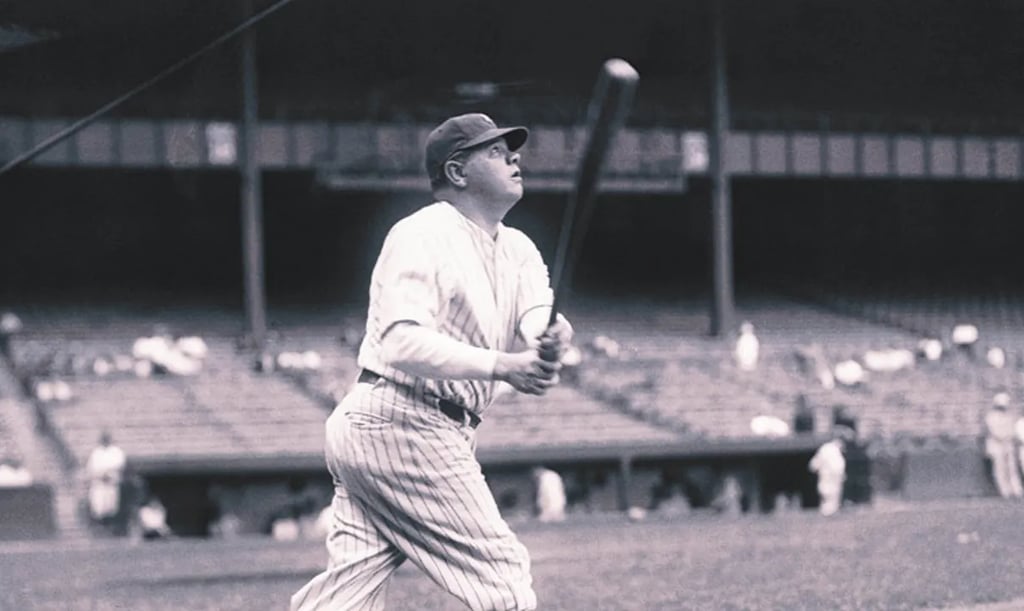
On October 1, 1932, in the heart of Chicago’s Wrigley Field, Babe Ruth etched his name into baseball lore with a moment so iconic it’s still debated nearly a century later: the “Called Shot.” In Game 3 of the World Series, with the New York Yankees facing the Chicago Cubs, Ruth’s audacious gesture and subsequent home run became a legend that transcends sports. But did he truly predict his swing, or is this tale a blend of fact and myth, amplified by time?
The Stage: A Heated World Series
The 1932 World Series was a clash of titans, with the Yankees, led by Ruth and Lou Gehrig, dominating a Cubs team desperate to reclaim glory. The series was tied at one game apiece, but the atmosphere in Chicago was electric with tension. Cubs fans, stung by their team’s struggles and taunts from the Yankees’ bench, hurled insults—and reportedly lemons—at Ruth, the game’s biggest star. Ruth, then 37, was no stranger to spectacle. With a career .342 batting average and 60 home runs in 1927 alone, he thrived in the spotlight.
In the fifth inning, with the score tied at 4-4, Ruth stepped to the plate against Cubs pitcher Charlie Root. What followed was a moment that would define his legacy. As Root prepared to pitch, Ruth gestured toward the outfield—or so the legend goes—before crushing a home run to centre field, a 440-foot blast that gave the Yankees a 5-4 lead. They won the game 7-5 and swept the series, but it was Ruth’s gesture that stole the headlines.
The Gesture: Fact or Folklore?
The “Called Shot” hinges on one question: Did Ruth point to the outfield to predict his home run, or was he simply gesturing to the crowd, the Cubs’ dugout, or nowhere in particular? Eyewitness accounts vary, and no definitive video evidence exists, as surviving footage is grainy and inconclusive. Let’s break down the evidence:
Supporting the Call: Sportswriter Joe Williams, in the New York World-Telegram, wrote that Ruth “pointed to the centerfield bleachers” before hitting the ball exactly there. Yankees teammate Lou Gehrig, in the on-deck circle, later recalled Ruth saying, “I’m gonna hit the next pitch down their throats.” Ruth himself fuelled the myth, reportedly confirming the story in interviews, saying he pointed to show he had one strike left to hit Baseball Hall of Fame. A 1990s home movie discovered by a fan, analyzed by ESPN, shows Ruth pointing, though it’s unclear where.
Skeptics’ View: Cubs pitcher Charlie Root vehemently denied Ruth called his shot, insisting he was gesturing at the Cubs’ bench in response to their taunts. Root later said, “If he pointed to the bleachers, I’d have thrown at his head” ([Chicago Tribune, 1982]). Some players, like Cubs catcher Gabby Hartnett, claimed Ruth was pointing at Root or the dugout, not the stands. The lack of consensus among the 50,000 fans and reporters at Wrigley adds to the ambiguity.
The Middle Ground: Historian Leigh Montville, in The Big Bam, suggests Ruth’s gesture was likely a spontaneous act of bravado, not a literal prediction, but one he embraced as the story grew. Ruth loved theatrics, and with 714 career home runs by his retirement, he had the confidence to back up bold gestures.
The Context: Ruth’s Larger-Than-Life Persona
To understand the “Called Shot,” you have to understand Babe Ruth. In 1932, he was baseball’s biggest draw, a former pitcher turned slugger who revolutionized the game with his power hitting. His 46 home runs that season led the league, and his charisma packed stadiums during the Great Depression. The Cubs-Yankees rivalry was intense, with Ruth reportedly calling the Cubs “cheap” for shortchanging his former teammate Mark Koenig, adding fuel to the taunts.
Ruth thrived on confrontation. As fans jeered and players heckled, he reportedly waved back, grinning, before his fateful at-bat. Whether he pointed to the bleachers or not, the home run—his second of the game—silenced the crowd and cemented his legend. The gesture, real or embellished, fit Ruth’s persona as a showman who could deliver under pressure.
The Legacy: Myth Meets Reality
The “Called Shot” endures because it captures the essence of sports: drama, defiance, and a touch of magic. It inspired countless retellings, from Hollywood films like The Babe to modern analyses in outlets like The Athletic, which in 2022 called it “baseball’s most famous myth”. Its cultural impact is undeniable:
Pop Culture: The moment is referenced in movies, books, and even video games, symbolizing audacity.
Baseball’s Growth: Ruth’s star power helped baseball become America’s pastime, with 1932 World Series attendance averaging 49,000 per game despite economic hardship.
Debate Fuel: The ambiguity keeps fans engaged, with polls (e.g., a 2019 MLB.com survey) showing 60% of fans believe Ruth called his shot, while 40% see it as exaggeration.
Why It Still Matters
In 2025, as baseball evolves with analytics and global expansion, the “Called Shot” reminds us of the sport’s storytelling roots. Ruth’s gesture—whether a bold prediction or a defiant taunt—captures the swagger that makes sports unforgettable. It’s a moment where fact and legend blur, inviting fans to believe in the impossible. As Ruth himself reportedly said, “I don’t know if I pointed, but I sure as hell hit it.”