
Countdown to Glory
FIFA World Cup 2026: The Biggest Tournament in Football History Awaits
FIFA WORLD CUP 2026
5/22/20267 min read
In the summer of 2026, football will enter a new era.
For the first time in history, the FIFA World Cup will feature 48 nations. For the first time, three countries—the United States, Canada, and Mexico—will jointly host the tournament. And for the first time, football's greatest spectacle will stretch across an entire continent, bringing together billions of viewers and millions of travelling supporters for what promises to be the largest sporting event ever staged.
From June 11 to July 19, the world will once again pause for football. Yet FIFA World Cup 2026 is about far more than a month-long tournament. It represents the continued globalization of the sport, the emergence of new football nations, and a defining moment for North America's rapidly growing football economy.
As the countdown enters its final weeks, anticipation is building around the contenders, the debutants, the stars, and the host nations preparing to welcome the world.
The road to football immortality is about to begin.
A World Cup Like No Other
The 2026 tournament marks the most significant structural change in World Cup history since the expansion from 24 teams to 32 teams in 1998.
The new format features 48 nations divided into 12 groups of four teams, creating more matches, more opportunities for emerging football countries, and a truly global competition unlike any previous edition.
The expansion has allowed nations from every confederation to dream bigger.
Traditional powerhouses remain present, but the tournament's enlarged field has also opened the door for countries that have spent decades pursuing a place on football's biggest stage.
That combination of established giants and ambitious newcomers may ultimately define the spirit of 2026.
Argentina: The Champions Everyone Must Beat
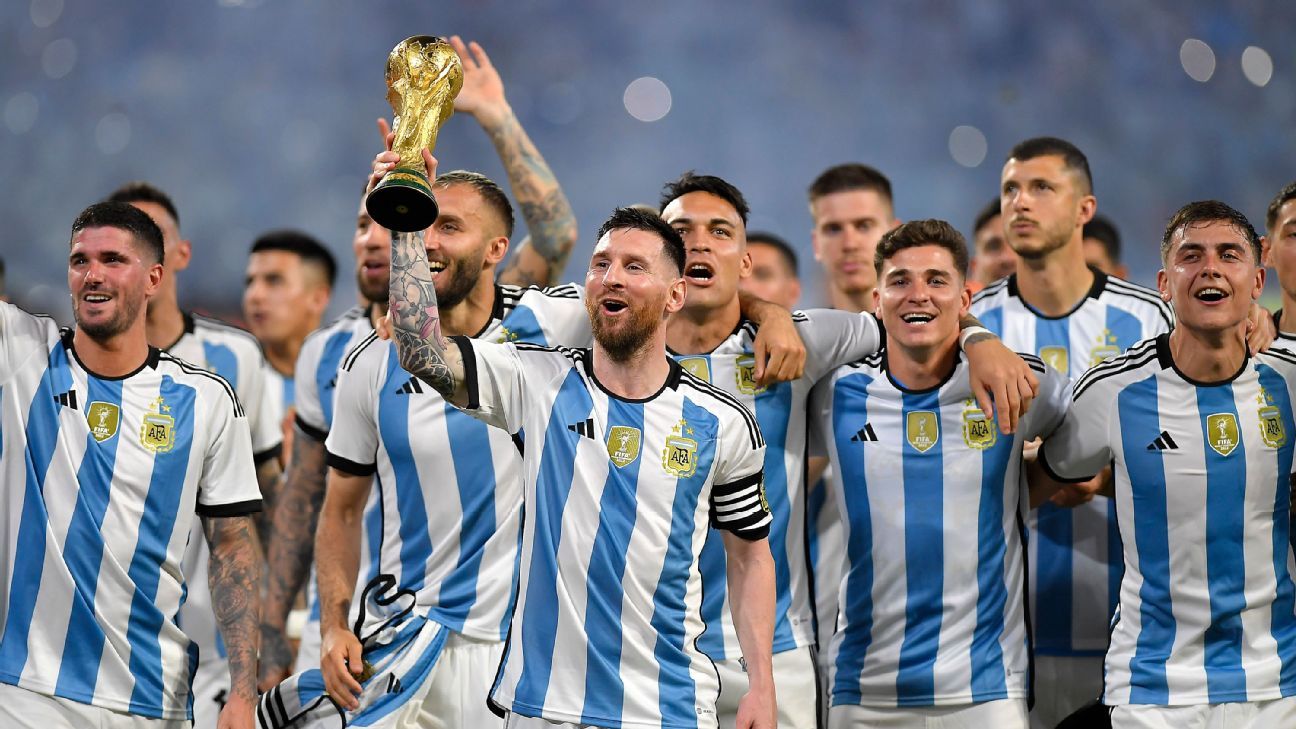
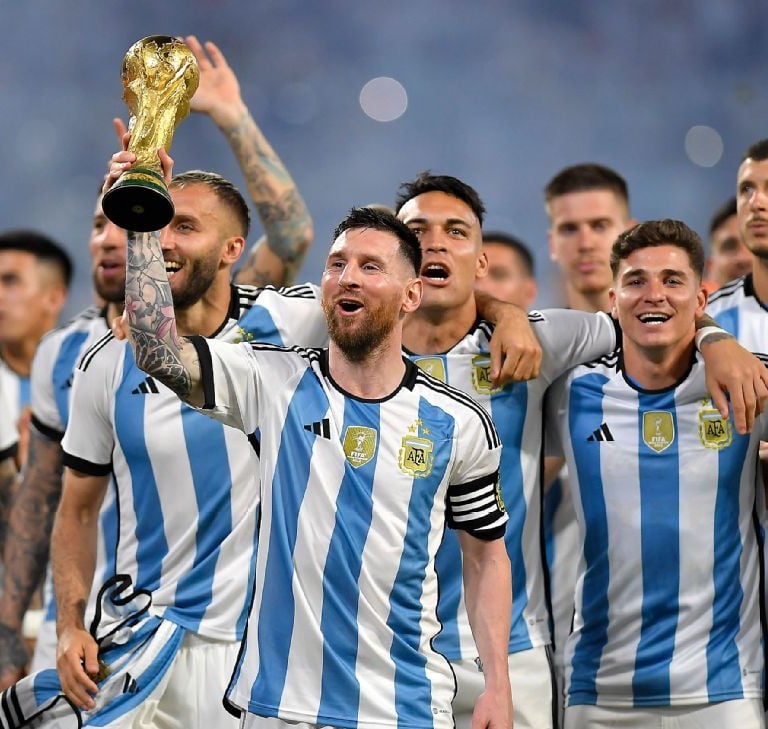
Any discussion of potential champions begins with reigning world champions Argentina.
Led by one of the greatest generations in the nation's history, Argentina enter the tournament carrying the confidence of their 2022 triumph in Qatar. Their success under coach Lionel Scaloni transformed a talented squad into a resilient and tactically disciplined team capable of winning under immense pressure.
The possibility of another World Cup appearance by Lionel Messi adds further intrigue. Already one of football's most iconic figures, Messi's presence would provide one of the tournament's most compelling storylines.
Argentina's blend of experience, tactical maturity, and championship pedigree makes them one of the strongest contenders to retain their crown.
Spain: The New Standard in World Football
Many observers view Spain as perhaps the most complete team entering the tournament.
The Spanish national team has successfully blended technical excellence with a new generation of dynamic young talent. Their triumph at UEFA Euro 2024 reinforced the belief that Spain has entered another golden period.
The emergence of players such as Lamine Yamal has added excitement to a squad already renowned for its technical sophistication and tactical intelligence.
Spain's ability to control possession, dominate midfield battles, and adapt to different opponents makes them one of the favourites to lift the trophy in North America.
France: Depth, Power, and Experience
France remains one of the most formidable forces in international football.
Since winning the 2018 World Cup and reaching the final in 2022, France has continued producing elite talent at an extraordinary rate. Few nations can match the depth available to coach Didier Deschamps.
At the center of their ambitions remains Kylian Mbappé, whose combination of speed, finishing ability, and big-match experience makes him one of the tournament's most dangerous players.
France's challenge is not talent but maintaining consistency across a month-long competition. If they find rhythm early, they possess all the qualities required to become champions once again.
Brazil's Search for a Sixth Star
No nation carries greater World Cup heritage than Brazil.
Five-time world champions and football's most successful national team, Brazil arrive in North America determined to end a title drought stretching back to 2002.
The pressure accompanying the Brazilian shirt remains immense, yet so does the talent.
Brazil's attacking flair, technical quality, and ability to produce moments of brilliance ensure they are contenders in every tournament they enter. Reports of Neymar returning to the national team setup have added another layer of interest to their campaign.
A successful Brazilian run would captivate global audiences and provide one of the tournament's most compelling narratives.
England's Pursuit of History
England continue to search for their first major international trophy since 1966.
Near misses have become a recurring theme. Semi-finalists in 2018, finalists at Euro 2020, and finalists again at Euro 2024, England have consistently demonstrated their quality without quite reaching the summit.
The squad remains among the strongest in world football.
Players such as Jude Bellingham, Harry Kane, and Phil Foden provide a blend of creativity, leadership, and elite-level experience.
Many believe England possess the talent required to end decades of frustration.
Whether they can handle the immense expectations accompanying that ambition remains one of the tournament's biggest questions.
Other Nations Capable of Going Deep
Beyond the leading favourites, several nations possess genuine title aspirations.
Portugal continue to benefit from one of the most talented generations in their history. Germany enter every major tournament with high expectations despite recent inconsistencies. The Netherlands remain capable of defeating any opponent on their day.
Morocco, after becoming the first African nation to reach a World Cup semi-final in 2022, have demonstrated that traditional hierarchies can be challenged. Their success inspired an entire continent and showed that global football's balance of power is gradually evolving.
The expanded format may create opportunities for surprises, but history suggests that one of football's established powers is still likely to lift the trophy.
The Debutants Ready to Make History
One of the most exciting aspects of World Cup 2026 is the arrival of four nations making their first-ever appearances at football's greatest tournament.
Uzbekistan
The first Central Asian nation ever to qualify for a FIFA World Cup, Uzbekistan's achievement represents a landmark moment for the region. Years of investment in youth development and football infrastructure have finally produced the breakthrough supporters have long awaited.
Manchester City defender Abdukodir Khusanov has emerged as the face of the country's football renaissance.
Jordan
Jordan's qualification ranks among the greatest achievements in the nation's sporting history.
Following impressive performances at recent continental competitions, Jordan completed a remarkable rise to secure its first World Cup berth. Their qualification reflects the growing competitiveness of Asian football.
Forward Mousa Al-Tamari will carry much of the nation's hopes.
Curaçao
With a population of approximately 156,000, Curaçao has become one of the smallest nations ever to qualify for a World Cup. Their achievement is among the most remarkable stories of the entire qualifying campaign.
Led by experienced coach Dick Advocaat, Curaçao's presence demonstrates the opportunities created by the expanded format.
Cape Verde
The Atlantic island nation of Cape Verde has also reached the World Cup for the first time.
Their qualification highlights the growing strength of African football and provides another example of how smaller nations can now dream of competing on football's biggest stage.
Collectively, these debutants embody the spirit of the expanded tournament.
Players Who Could Define the Tournament
Every World Cup produces new heroes.
While established stars will dominate headlines, several players appear poised to shape the narrative of 2026.
Lamine Yamal enters the tournament as one of football's most exciting young talents. Mbappé remains the sport's premier game-changing attacker. Bellingham has developed into one of the world's most complete midfielders.
For host nation supporters, much attention will focus on Christian Pulisic, whose leadership and experience are central to the United States' ambitions.
Elsewhere, Khusanov of Uzbekistan, Al-Tamari of Jordan, and numerous emerging talents from Africa, Asia, and the Americas will seek to introduce themselves to global audiences.
World Cups have a habit of creating unexpected stars.
2026 is unlikely to be any different.
Why This Tournament Matters to North America
While the World Cup belongs to the world, its significance for the United States cannot be overstated.
The 1994 World Cup transformed perceptions of football in America and Canada as it played a crucial role in the creation of Major League Soccer and Canadian Premier League. Over the following three decades, participation rates surged, professional infrastructure expanded, and football became one of the country's fastest-growing sports.
Today, the United States enters 2026 from a very different position.
MLS has grown into a stable and ambitious league. Football-specific stadiums have become commonplace. International stars have helped elevate the league's profile, while millions of young Americans now grow up with football as a central part of their sporting culture.
The 2026 World Cup therefore represents not an introduction but a statement.
It offers the United States an opportunity to showcase the progress made since 1994 and to demonstrate that football has become an integral part of the country's sporting identity. Mexico have the opportunity to test themselves against some of the biggest in world football as the Liga MX continues to grow and Mexican players are prevalent across Europe’s top leagues.
Economically, the tournament is expected to generate billions of dollars in activity across tourism, hospitality, transportation, broadcasting, and event management. Culturally, it provides an opportunity to connect diverse communities through a shared passion for the world's game.
For American football, 2026 may ultimately be remembered as the moment the sport reached a new level of mainstream influence.
A Summer That Could Change Football Forever
Every World Cup carries its own identity.
Mexico 1970 gave the world Pelé's masterpiece. USA 1994 introduced football to a new North American audience. Germany 2006 delivered a festival of football. Qatar 2022 produced one of the greatest finals in history.
What will define 2026?
Perhaps it will be the emergence of a new champion. Perhaps it will be the arrival of a debutant nation that captures global imagination. Perhaps it will be the final World Cup appearance of an iconic superstar or the first glimpse of football's next generation.
What is certain is that the tournament will be historic before a ball is even kicked.
With 48 nations, three host countries, billions of viewers, and countless stories waiting to unfold, FIFA World Cup 2026 promises to be the most ambitious World Cup ever staged.
The countdown has begun.
And the world is ready.