Beyond the Field
How Brands & Media Are Doubling Down on Women’s Sport
WOMEN'S SPORTS
12/11/20255 min read
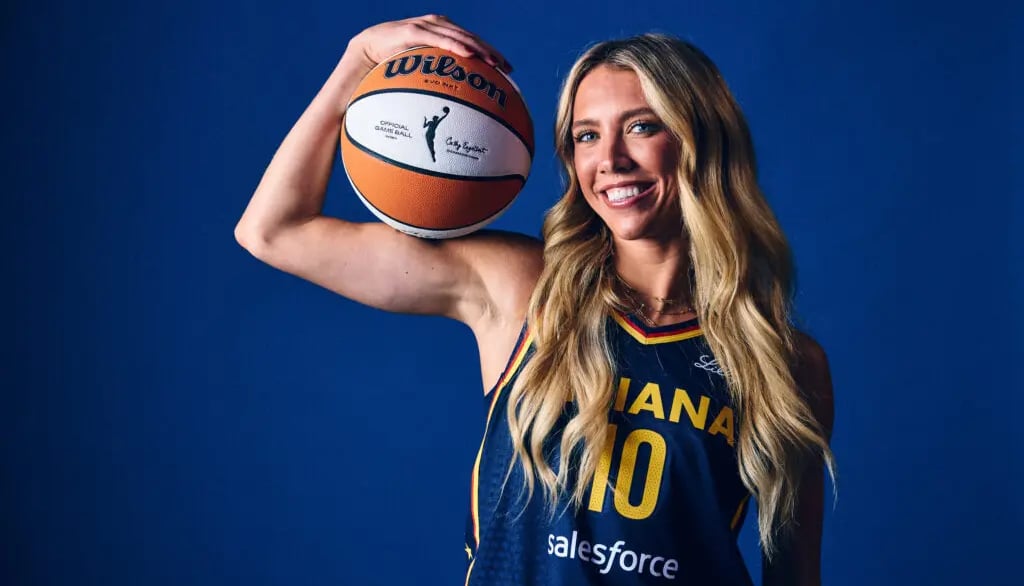
In the roar of packed arenas and the glow of streaming screens, women's sports are no longer a sideshow—they're the main event. From the electric dunks of the WNBA to the precision strikes of the NWSL, 2025 has cemented a seismic shift: global revenues for elite women's sports are projected to hit $2.35 billion this year, a staggering 25% leap from 2024's record $1.88 billion. This isn't fleeting hype; it's a calculated surge fuelled by savvy brands chasing engaged audiences and media outlets rewriting the playbook on coverage. As leagues expand and stars shine brighter, the question isn't if women's sports will dominate—it's how brands and broadcasters are accelerating the momentum.
The Investment Boom: Brands Betting Big on the Future
Gone are the days when sponsorships in women's sports were charitable footnotes. In 2025, they're high-ROI power plays. Sponsorship deals across major women's properties surged 12% year-over-year in the 2024-25 seasons, outpacing men's leagues by nearly 50%. Deloitte's latest report attributes this to a "virtuous cycle" of rising viewership and fandom, with 99% of brand decision-makers reporting increased investments over the past five years. Commercial revenue now accounts for 54% of the sector's income, underscoring how brands are viewing women's sports as a gateway to purpose-driven consumers.
Beauty and lifestyle giants are leading the charge, drawn by the cultural cachet of female athletes. Glossier sponsored the U.S. women's national basketball team at the 2024 Olympics and served as the official beauty partner for the 2024 and 2025 WNBA drafts, blending influencer trips with on-court activations. E.L.F. Cosmetics inked a deal with the National Women's Soccer League (NWSL), while ILIA partnered with Paris Saint-Germain's women's team in May 2025, emphasizing "high performance without compromise." Sephora's collaboration with the new 3-on-3 basketball league Unrivaled has generated buzz through pregame "fit checks" and tunnel walks, proving the ROI in social engagement.
Traditional powerhouses aren't sitting idle. Nike expanded its league-wide partnership with Liga MX Femenil, and BIC Soleil titled the Pro Volleyball Federation Championship in May 2025, riffing on the sport's "bic" attack with a clever ad campaign. The WNBA tipped off 2025 with a record 45 sponsors, including 14 newcomers like its first official wine partner and sports watch line, while the Indiana Fever saw a 43% spike in deals and the Golden State Valkyries drew over 10,000 season ticket holders for their debut. The NWSL hit an all-time high of 13 league-level sponsors, eight joining post-2023, with activations from Ally Financial, Gatorade, and Pepsi fuelling a 19% uptick in deals, while Racing Louisville FC alone secured 92 partnerships and Denver's expansion fee hit a record $110 million, doubling the prior high. The Professional Women's Hockey League (PWHL) boasts around 50 partners, with newcomers like Bravado Designs tapping non-traditional categories in its second season. The LPGA saw a 14% rise in sponsorship activity, with FM Global adding $3.8 million to its purse. These partnerships aren't one-offs; 68.4% of deals in a Sports Business Journal database started in 2024 or 2025, with 73% from brands holding just one property—signalling early-stage frenzy with runway for more.
This influx isn't just about logos on jerseys; it's ecosystem-building. JPMorgan Chase hosted "Match Point: Investing in the Women’s Game" in September 2025, spotlighting entrepreneurs and community ties. In volleyball, the League One Volleyball (LOVB) raised $160 million in 2024 for its 2025 debut, attracting rookies like Revolve and Rebel Girls targeting Gen Z fans. As Sports Innovation Lab notes, 82% of companies plan to boost women's sports budgets in 2025, with 34% increasing by over 10%—a deliberate reallocation from men's properties.
Lights, Camera, Parity: Media's Evolving Lens
If brands are the fuel, media is the engine propelling women's sports into the spotlight. Coverage has nearly tripled since 2019, hitting 20% of all sports airtime in 2025—up from under 6% just six years ago. This surge is no accident: broadcasters are chasing the numbers, with women's events delivering 40% more impactful ads than primetime averages.
The WNBA's 2025 media rights deal, valued at $200 million annually starting 2026, triples the prior $60 million pact and outpaces the NBA's renewal by 2.6 times. Shared across NBCUniversal, Disney's ESPN, and Amazon, it ensures prime slots. The NWSL's $240 million, four-year deal with CBS, ESPN, Prime Video, and Scripps—effective 2024—catapulted annual rights from $1.5 million to $60 million, a 40-fold jump. Viewership followed: NWSL's 2024 championship averaged 967,900 viewers, up 18%.
Televised games across WNBA, NCAA women's basketball, and NWSL clocked 370 million viewer hours in 2024—430% above 2021 levels. The 2025 NCAA women's final drew 8 million viewers (peaking at 9.8 million), while WNBA regular-season audiences neared 1 million per game, up 170% from 2023. In the UK, domestic women's sports hit a record 44.7 million viewers in 2024, eclipsing 2022's 37.6 million.
Digital platforms are the real disruptors. The Barclays Women's Super League (BWSL) YouTube channel racked up 39.6 million views since July 2024, ranking second globally among women's leagues. England's women's rugby players outposted the men's team on TikTok in early 2025, garnering 6.7 million views—75% more than their male counterparts. Netflix's deal for the 2027 and 2031 Women's World Cups signals streaming's stake, while FIFA's 2023 Women's World Cup generated 3.2 billion social/digital views.
Outlets are adapting: USA Today, Front Office Sports, and the Associated Press added dedicated women's reporters in 2025, while Betches Media launched Betches Sports for cultural deep dives. As one executive put it, "Women's sports have become an opportunity to expand our businesses" in a fragmented media landscape.
Star Power and Global Echoes
Athletes are the X-factor, turning games into cultural moments. Caitlin Clark's "effect" propelled Indiana Fever sponsorships up 43% in 2024, with the team leading WNBA social follows by 415%. Cameron Brink topped endorsements with 31 deals (CVS, SoFi, New Balance), while Naomi Osaka holds 23. Ilona Maher's 2025 move to Bristol Bears shattered attendance records, boosted by her Paula’s Choice ambassadorship.
Globally, the UEFA Women's EURO 2025 and Women's Rugby World Cup are primed for records, with 220,000 Rugby World Cup tickets sold pre-event. In the US, 30% of adults now follow women's pro sports, per an AP-NORC poll, with viewership at 18% overall—up 4 points in six months. WNBA interest has grown 90% since Q4 2021.
The Road Ahead: Sustainability Over Spectacle
As 2025 unfolds, the focus sharpens on legacy. Leagues like WNBA (expanding to Toronto and Portland in 2026) and NWSL (Boston in 2026) prioritize infrastructure, with new facilities and data-driven activations. Challenges persist—UK broadcast reach dipped 13% early 2025 amid scheduling dips—but digital surges (e.g., BWSL's TikTok boom) signal resilience.
Brands and media doubling down aren't just cashing in; they're co-authoring a more equitable playbook. As Deloitte urges, treat women's sports like a "venture capitalist" bet: high-reward, data-backed, and transformative. In this new era, the field isn't just level—it's expanding, inviting everyone to play.